
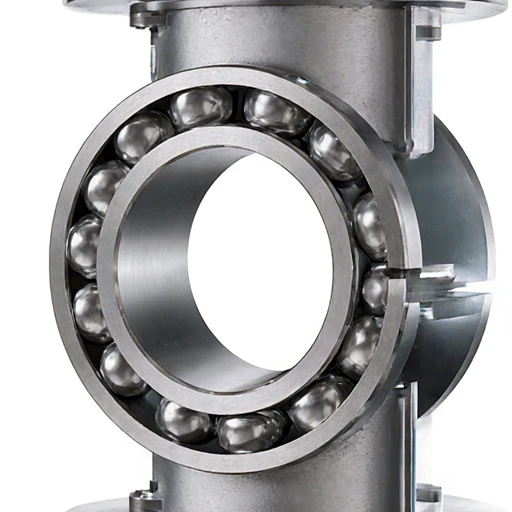
The F6-12M thrust ball bearing is a compact, metric-sized bearing specifically designed to support axial loads in a single direction. Its structure, dimensions, and performance characteristics make it a practical choice for light-duty mechanical systems where space is limited but precise axial positioning is required. As part of the broader ball bearings family, the F6-12M belongs to the category of metric single direction thrust ball bearings, a classification that defines both its load orientation and application scope.
Understanding the F6-12M Bearing Design
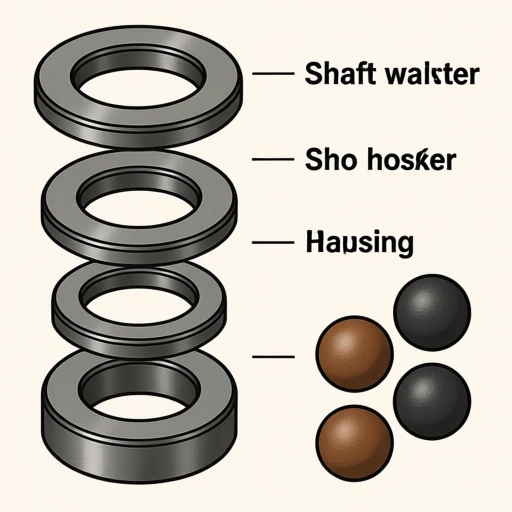
The F6-12M is engineered with a simple yet effective thrust bearing structure, typically consisting of:
- Two hardened steel washers (shaft washer and housing washer)
- A ball-and-cage assembly positioned between them
This configuration allows the bearing to carry axial forces efficiently while maintaining smooth rotation. Unlike radial ball bearings, the F6-12M is not intended to support radial loads, which is a critical consideration during bearing selection and system design.
From a dimensional perspective, the “F6-12M” designation indicates:
- Metric sizing
- A small bore suitable for miniature or compact shafts
- Compatibility with precision assemblies requiring controlled axial movement
These characteristics place the F6-12M firmly within the thrust ball bearings category, while still benefiting from the low-friction advantages associated with standard ball bearing designs.
Key Performance Features of F6-12M
The F6-12M thrust ball bearing is valued for its balance of compact size and functional reliability. Typical performance advantages include:
- Smooth axial load transmission with minimal friction
- Stable operation at moderate rotational speeds
- Simple installation and replacement due to separable components
These features make it especially suitable for light-duty axial load environments, where excessive complexity or oversized bearings would be inefficient.
Typical Applications of the F6-12M Thrust Ball Bearing
Thanks to its small size and single-direction thrust capability, the F6-12M is commonly used in applications such as:
- Small gearboxes and transmission mechanisms
- Lead screw and adjustment assemblies
- Miniature motors and electromechanical devices
- Instrumentation and precision mechanical equipment
In many of these systems, the F6-12M works alongside radial ball bearings, handling axial forces while radial bearings manage radial loads—an arrangement frequently recommended in professional bearing selection.
Procurement Considerations for F6-12M
When sourcing an F6-12M thrust ball bearing, buyers should evaluate more than just size. Key factors include:
| Consideration | Why It Matters |
|---|---|
| Load rating | Ensures the bearing can safely handle expected axial forces |
| Material & heat treatment | Impacts wear resistance and service life |
| Cage design | Affects speed capability and operational stability |
| Lubrication condition | Influences friction, noise, and maintenance cycles |
Choosing a properly specified F6-12M helps reduce premature failure and supports long-term system reliability, particularly in compact mechanical assemblies.
Position of F6-12M Within Thrust Ball Bearings
Within the wider range of metric single direction thrust ball bearings, the F6-12M stands out for its small footprint and straightforward design. It is best suited for applications where:
- Axial loads act in one direction only
- Space constraints limit bearing size
- Cost-effective, standardized solutions are preferred
For engineers and purchasing managers, the F6-12M represents a practical, well-defined thrust bearing option that integrates seamlessly into metric-based designs.
