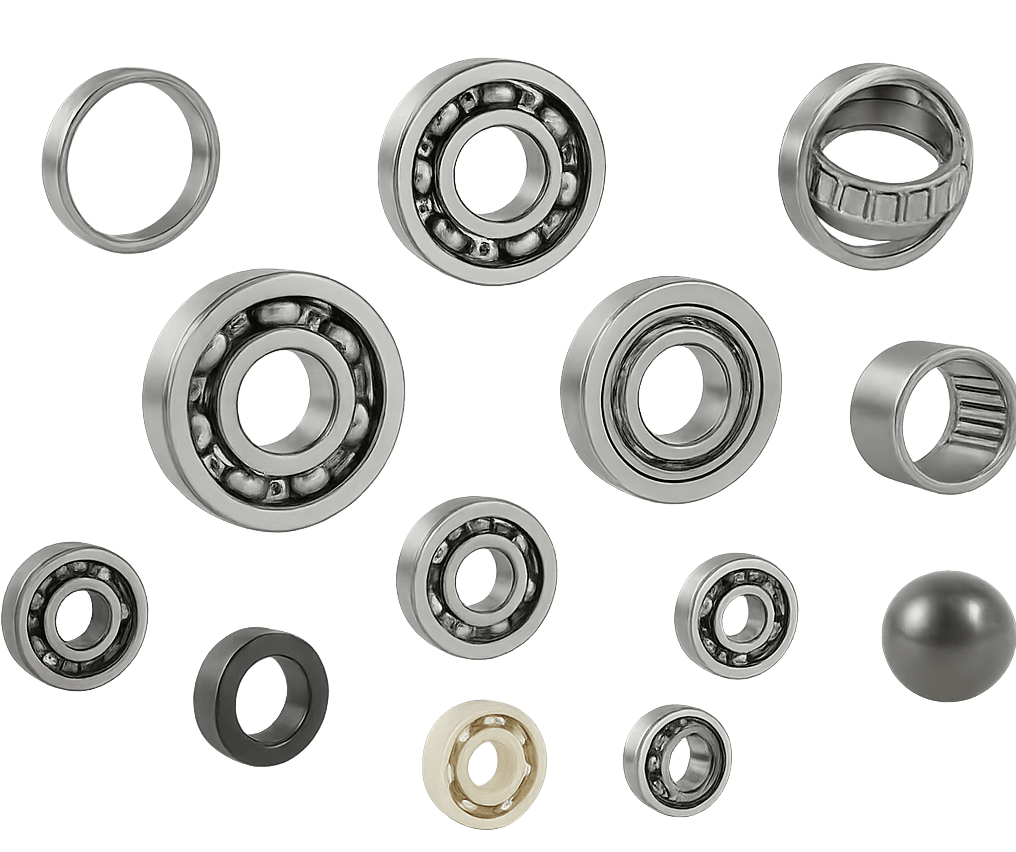
This article explains the concept of torque in slewing bearings, why it is critical for performance, and how to calculate it. It covers the main factors that influence torque, including load types, lubrication, bearing materials, and installation practices. Practical calculation examples, advanced considerations, and real-world applications in construction, renewable energy, and industrial machinery are also discussed. Finally, the article provides guidance on ensuring optimal torque performance through proper maintenance, inspection, and timely component replacement.
Introduction
Slewing bearings are essential components in heavy-duty machinery, enabling smooth rotation while supporting large axial, radial, and moment loads. One of the most important performance parameters of slewing bearings is torque—the rotational force required to initiate and sustain motion.
This guide explains what torque is, how it applies to slewing bearings, which factors influence it, methods of calculation, and best practices for ensuring reliable performance.
Understanding Slewing Bearings
Slewing bearings, also known as slewing rings or turntable bearings, are large-diameter rolling bearings designed to handle complex loads. They are widely used in cranes, wind turbines, excavators, and industrial machinery.
Their design allows both rotation and the transmission of axial, radial, and overturning moment loads simultaneously.
Key Components of Slewing Bearings and Torque Management
| Component | Function | Role in Torque Management |
|---|---|---|
| Inner Ring | Raceway for rolling elements, attached to rotating structure | Transfers applied torque to rolling elements |
| Outer Ring | Raceway fixed to stationary structure | Provides support and stability |
| Rolling Elements | Balls or rollers | Reduce friction, distribute torque evenly |
| Cages/Spacers | Maintain spacing of rolling elements | Ensure smooth load transfer, minimize torque losses |
What is Torque?
Torque is the rotational equivalent of linear force. It is expressed as:
τ=F×r\tau = F \times r
Where:
-
τ = torque (Nm)
-
F = applied force (N)
-
r = distance from force to axis of rotation (m)
In slewing bearings, torque defines how easily the bearing can rotate under applied loads.
Why Torque Matters in Slewing Bearings
-
Ensures smooth rotation under heavy loads
-
Reduces wear on raceways and rolling elements
-
Improves efficiency of cranes, turbines, and machinery
-
Prevents failures caused by overloading or insufficient torque
Incorrect torque—either too low or too high—can shorten service life or cause premature bearing failure.
Factors Affecting Torque in Slewing Bearings
1. Load Types and Distribution
-
Axial Loads (parallel to axis): influence friction torque.
-
Radial Loads (perpendicular to axis): increase internal stress.
-
Moment Loads (tilting forces): create uneven pressure zones, reducing lifespan.
2. Friction and Lubrication
Proper lubrication reduces friction and improves torque efficiency.
Without lubrication, torque rises sharply, leading to overheating and wear.
| Lubrication Benefit | Description |
|---|---|
| Reduces friction | Creates a protective film |
| Optimizes torque | Improves energy efficiency |
| Protects surfaces | Prevents metal-to-metal contact |
| Extends service life | Reduces wear and pitting |
3. Bearing Design and Materials
Material properties directly influence torque performance:
| Material | Advantages | Limitations |
|---|---|---|
| Bearing Steel | High hardness, fatigue resistance | Poor corrosion resistance |
| Ceramics | Lightweight, high-temp capability | Brittle, expensive |
| Stainless Steel | Corrosion resistance | Lower hardness |
| Polymer/Plastic | Self-lubricating, corrosion-proof | Only for low-load use |
| Bronze | Durable under vibration | Requires frequent lubrication |
4. Installation and Alignment
Improper installation increases friction and torque demand.
-
Uneven preload → torque spikes
-
Bolt loosening → poor torque transmission
-
Contamination → torque instability
Calculating Torque in Slewing Bearings
General Formulas
-
Power relation:
M=PωM = \frac{P}{\omega}
-
Inertia relation:
M=J×αM = J \times \alpha
-
Force relation:
M=F×LM = F \times L
Example (Crane Jib Rotation)
-
Mass = 5000 kg
-
Radius = 10 m
-
Speed = 0.2 rad/s
-
Power = 10 kW
-
Efficiency = 90%
-
Moment of Inertia:
J=m×r2=5000×102=500,000 kg⋅m2J = m \times r^2 = 5000 \times 10^2 = 500,000 \, kg·m^2
-
Torque from Power:
M=Pω=10,0000.2=50,000 NmM = \frac{P}{\omega} = \frac{10,000}{0.2} = 50,000 \, Nm
-
Adjust for Efficiency:
Mactual=M×η=50,000×0.9=45,000 NmM_{actual} = M \times \eta = 50,000 \times 0.9 = 45,000 \, Nm
Advanced Considerations
Accurate torque prediction may require software simulation to account for:
-
Dynamic load cycles
-
Temperature fluctuations
-
Variable operating speeds
-
Misalignment and preload variations
-
Lubrication intervals
Applications of Slewing Bearing Torque
Industrial Machinery
Supports heavy-duty rotary tables, robotics, and automated systems.
Construction Equipment
Enables cranes and excavators to rotate 360° safely under load.
Renewable Energy
-
Wind Turbines: Torque drives blade pitch and yaw systems.
-
Solar Trackers: Torque ensures precise solar alignment for maximum energy output.
Ensuring Optimal Torque Performance
Maintenance Practices
-
Regular lubrication checks
-
Vibration and temperature monitoring
-
Bolt torque inspection
-
Seal condition verification
Upgrading and Replacement
Bearings may need replacement if:
-
Excessive wear or cracking occurs
-
Load demands exceed original design
-
Lubrication failures cause overheating
-
Equipment requirements change
Conclusion
Torque is fundamental to the performance and reliability of slewing bearings. Proper understanding, calculation, and management of torque ensure long service life and efficient operation in industries ranging from construction to renewable energy.
By considering load distribution, lubrication, design, installation, and regular maintenance, engineers and purchasing managers can make informed decisions that optimize equipment performance and minimize downtime.