608 Bearing Dimensions – Complete Engineering & Selection Guide
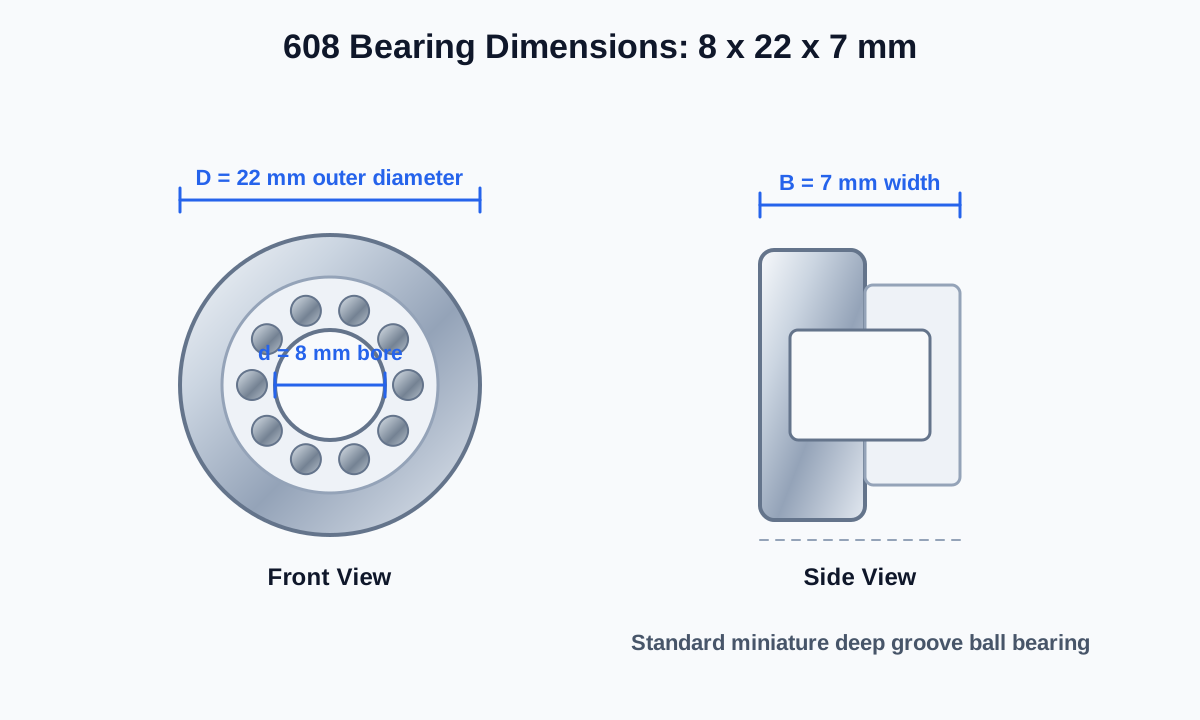
608 bearing dimensions are standardized at 8 mm inner diameter, 22 mm outer diameter, and 7 mm width (8 × 22 × 7 mm). As one of the most widely used miniature deep groove ball bearings, the 608 series is essential in applications ranging from skateboards and electric motors to industrial automation systems.
Understanding its dimensions, tolerances, performance limits, and selection criteria is critical for engineers, designers, and buyers.
1. 608 Bearing Dimensions & Technical Specifications
| Parameter | Value |
|---|---|
| Inner Diameter (d) | 8 mm |
| Outer Diameter (D) | 22 mm |
| Width (B) | 7 mm |
| Dynamic Load Rating (Cr) | Approximately 335 kgf |
| Static Load Rating (C₀r) | Approximately 140 kgf |
| Structure | Single-Row Deep Groove |
| Material | Chrome Steel / Stainless Steel / Ceramic |
| Precision Standards | ABEC, ISO 492, DIN 620, JIS B 1514 |
Engineering Interpretation
8 mm bore: Compatible with standard shaft sizes used in motors, wheels, compact tools, and small mechanical assemblies.
22 mm outer diameter: Determines housing compatibility, mounting space, and press-fit requirements.
7 mm width: Influences axial space requirements, load distribution, and overall assembly layout.
The standard dimensions of a 608 bearing are:
- Inner diameter (d): 8 mm
- Outer diameter (D): 22 mm
- Width (B): 7 mm
These dimensions follow international dimensional standards, helping provide interchangeability between bearings produced by different manufacturers.
In addition to size, several technical parameters influence performance:
- Dynamic load rating (Cr): approximately 335 kgf
- Static load rating (C₀r): approximately 140 kgf
- Bearing type: deep groove ball bearing
- Structure: single row
- Material: typically chrome steel, with stainless steel and ceramic options available
These specifications make the 608 bearing suitable for moderate loads, relatively high rotational speeds, and compact mechanical systems.
Actual load ratings can differ between manufacturers, internal designs, materials, and precision grades. Engineers should therefore verify the official product datasheet before finalizing a design.
2. Engineering Meaning Behind the Dimensions
Each bearing dimension is more than a catalog number. It directly affects shaft design, housing geometry, mounting method, and available installation space.
The 8 mm bore diameter determines shaft compatibility. This shaft size is commonly found in small electric motors, skate wheels, precision tools, rollers, and compact transmission systems.
Designers must select a suitable shaft tolerance to prevent undesirable movement while avoiding excessive interference.
The 22 mm outer diameter determines the required housing bore. It influences housing wall thickness, structural strength, mounting method, and heat dissipation.
The 7 mm width affects axial installation space. In compact equipment, this dimension can become a critical layout constraint.
The three primary dimensions must be considered together. A bearing with the correct bore diameter cannot replace a 608 bearing if its outside diameter or width differs.
3. What Does “608 Bearing” Mean?
The bearing designation “608” belongs to the common metric deep groove ball bearing numbering system.
In general:
- 6 identifies a single-row deep groove ball bearing series.
- 08 identifies the dimensional designation associated with the 8 mm bore in this miniature bearing size.
Therefore, a 608 bearing is a single-row deep groove ball bearing with standard nominal dimensions of:
8 × 22 × 7 mm
This standardized designation allows engineers, distributors, maintenance technicians, and buyers to identify compatible bearing sizes across different manufacturers.
However, the base number alone does not describe every characteristic.
Additional suffixes may indicate:
- Shields
- Rubber seals
- Internal clearance
- Precision grade
- Cage type
- Lubricant
- Material
- Special temperature capability
For example, 608, 608ZZ, and 608-2RS share the same basic dimensions but may behave differently in terms of friction, contamination resistance, lubrication retention, and speed capability.
4. Internal Structure and Working Principle
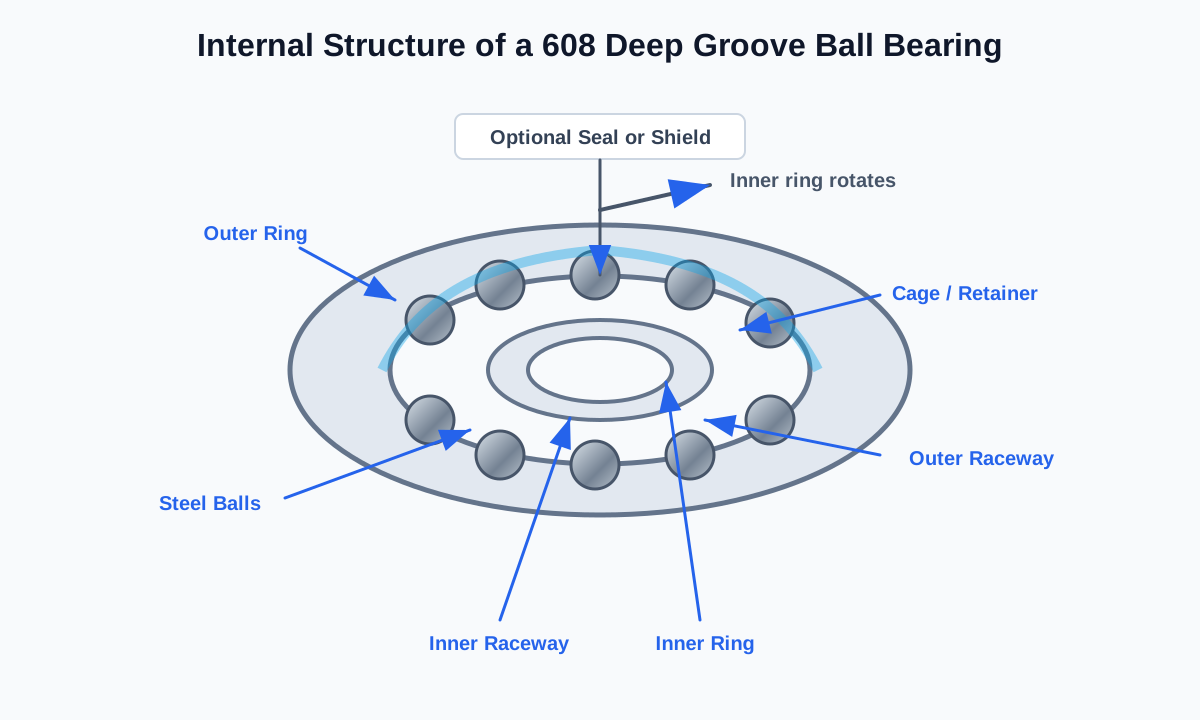
A 608 bearing typically consists of the following primary components:
- Inner ring
- Outer ring
- Rolling elements or balls
- Cage or retainer
- Raceway grooves
- Optional shields or seals
The deep raceway grooves closely conform to the shape of the balls. This design allows the bearing to carry radial loads while also supporting moderate axial loads in both directions.
During operation:
- The inner ring commonly rotates with the shaft.
- The outer ring is commonly retained inside the housing.
- The balls roll between the inner and outer raceways.
- The cage maintains consistent spacing between the balls.
- Lubrication separates contacting surfaces and reduces wear.
The rolling motion produces substantially less friction than sliding contact, which is why deep groove ball bearings are widely used in high-speed rotating systems.
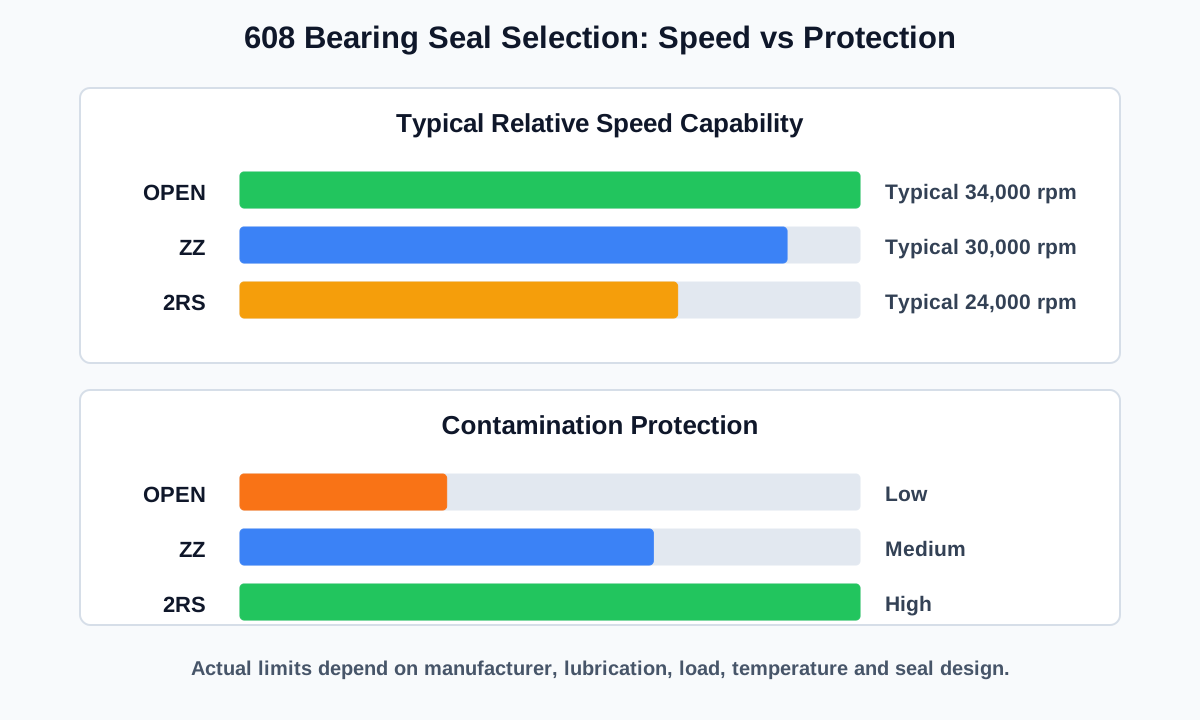
5. Sealing Types: OPEN vs ZZ vs 2RS
| Type | Closure | Relative Friction | Typical Application |
| OPEN | No shield or seal | Lowest | Clean, controlled systems |
| 608ZZ | Metal shields | Low | High-speed and moderately clean systems |
| 608-2RS | Rubber contact seals | Medium | Dusty, wet, or contaminated environments |
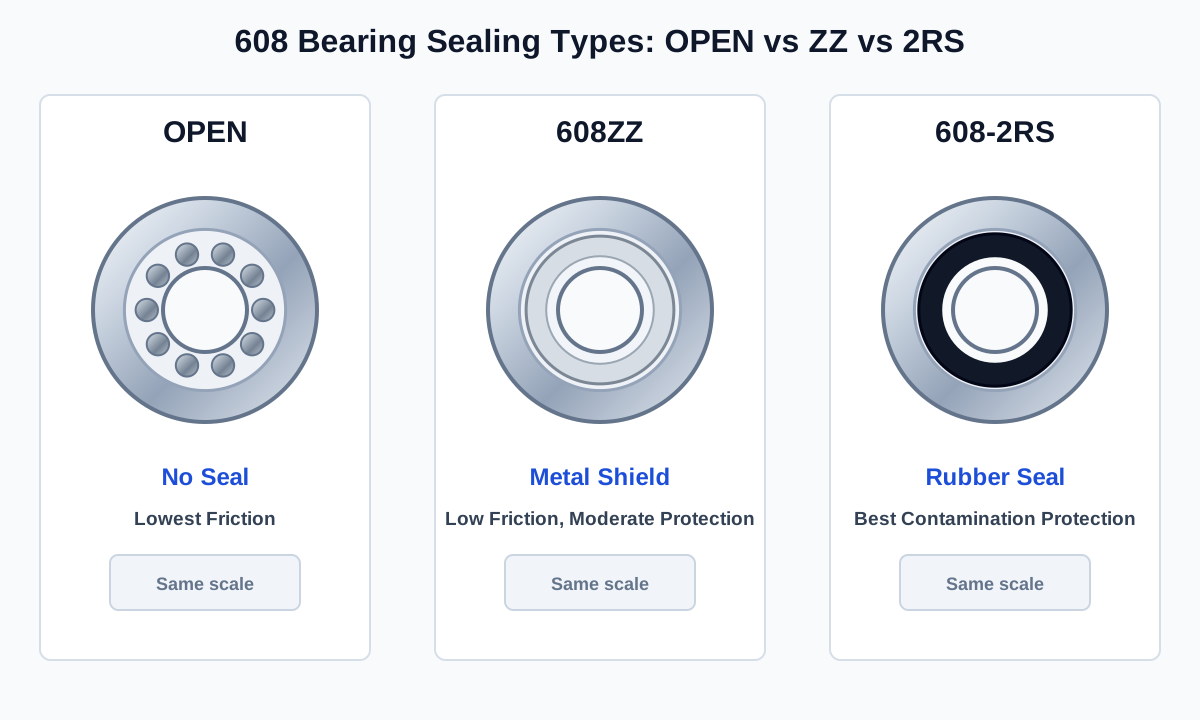
608 bearings are commonly supplied in three closure configurations.
OPEN Bearing
An open 608 bearing has no shields or seals.
Advantages include:
- Lowest seal-related friction
- Easy access for lubrication
- Good suitability for clean, controlled environments
- Potentially high speed capability
Limitations include:
- Little protection against dust or moisture
- Lubricant can escape more easily
- Frequent maintenance may be required in some systems
Open bearings are commonly used inside enclosed machinery where external components already protect the bearing.
608ZZ Bearing
A 608ZZ bearing normally uses metal shields on both sides.
Advantages include:
- Low friction
- Reduced lubricant leakage
- Moderate protection from larger particles
- Good suitability for relatively high-speed applications
Metal shields usually do not contact the inner ring in the same way as a rubber contact seal. This helps keep friction relatively low.
However, shields are not intended to provide strong protection against water, fine dust, or aggressive contamination.
608-2RS Bearing
A 608-2RS bearing uses rubber or elastomer seals on both sides.
Advantages include:
- Stronger protection against dust
- Better lubricant retention
- Improved resistance to moisture and contamination
- Reduced maintenance in exposed environments
The trade-off is higher friction, especially when contact seals rub against the inner ring.
This configuration is commonly selected for outdoor equipment, skate wheels, conveyors, cleaning equipment, and dusty production environments.
6. Speed Ratings and Performance Limits
Speed capability is an important consideration when selecting a 608 bearing.
Typical catalog values may appear similar to the following:
| Type | Illustrative Maximum Speed |
| OPEN | Approximately 34,000 rpm |
| ZZ | Approximately 30,000 rpm |
| 2RS | Approximately 24,000 rpm |
These values should be treated as general examples rather than universal limits.
Actual limiting speed depends on:
- Bearing manufacturer
- Internal geometry
- Lubricant type and quantity
- Seal design
- Applied radial and axial loads
- Internal clearance
- Mounting accuracy
- Operating temperature
- Cooling conditions
- Required service life
Higher rotational speed generates more heat. Excessive heat can reduce lubricant life, alter internal clearance, damage seals, and accelerate raceway wear.
For higher-speed applications, engineers should verify:
- Manufacturer speed ratings
- Lubrication suitability
- Dynamic balance
- Shaft and housing alignment
- Internal clearance after installation
- Temperature rise under real operating conditions
A C3 clearance bearing is sometimes selected when heat or tight interference fits are expected to reduce internal clearance. However, C3 should not automatically be treated as the best option for every high-speed system.
7. Material Options and Their Impact
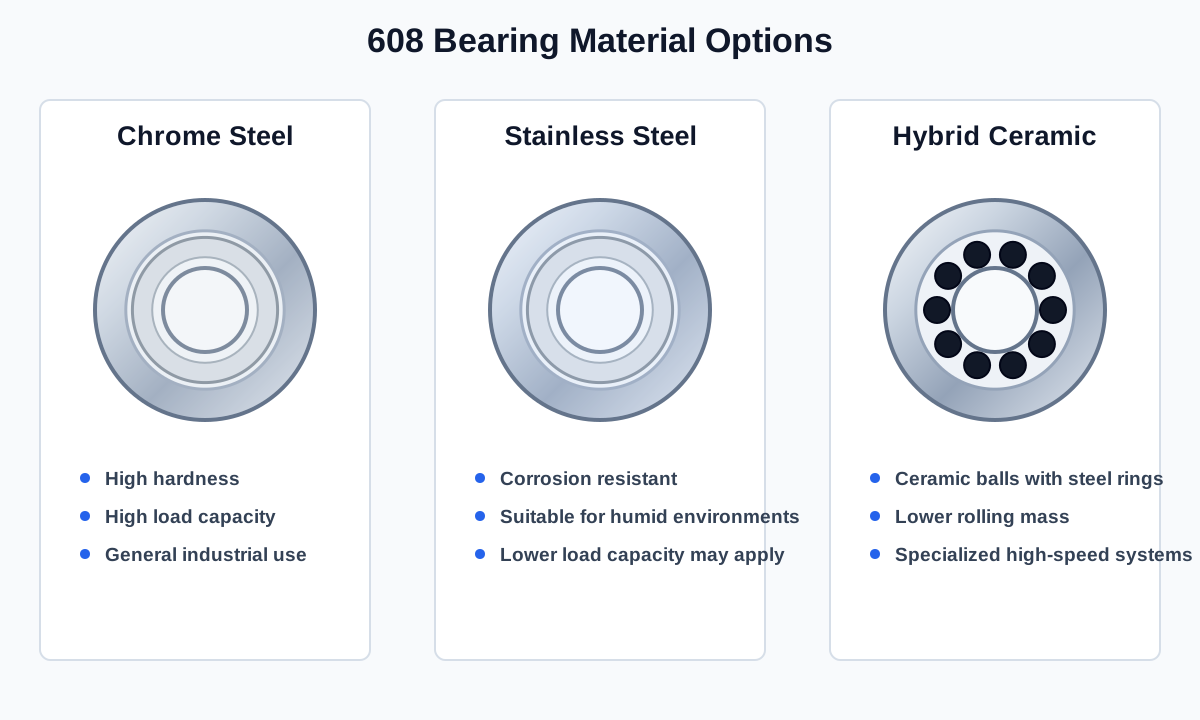
Different materials can significantly affect corrosion resistance, load capacity, friction, service life, and cost.
Chrome Steel
Chrome steel is the most widely used material for standard 608 bearings.
Typical advantages include:
- High hardness
- Good fatigue resistance
- High wear resistance
- Strong load-carrying capacity
- Competitive cost
It is suitable for most indoor industrial, motor, wheel, tool, and machinery applications where corrosion is not a major concern.
Chrome steel bearings require adequate protection from water and corrosive chemicals.
Stainless Steel
Stainless steel 608 bearings are selected when corrosion resistance is more important than achieving the highest possible load rating.
Typical applications include:
- Humid environments
- Food-related equipment
- Washdown systems
- Marine-related products
- Medical devices
- Chemical-processing equipment
Stainless steel grades and performance vary between suppliers. Not every stainless bearing has the same corrosion resistance or hardness.
Hybrid Ceramic
Hybrid ceramic bearings typically use ceramic balls together with steel inner and outer rings.
Common ceramic ball materials include silicon nitride.
Potential advantages include:
- Lower rolling mass
- Reduced centrifugal force
- Electrical insulation through the rolling elements
- Lower friction in some operating conditions
- High-speed capability
- Reduced adhesive wear
- Longer lubricant life in suitable systems
Disadvantages include:
- Higher cost
- More specialized sourcing
- Potential sensitivity to certain impact conditions
- Performance benefits that may not be necessary in ordinary equipment
A hybrid ceramic bearing should not be confused with a full ceramic bearing. In a hybrid design, the rings are normally steel while the balls are ceramic.
8. Tolerance, Clearance, and Fit
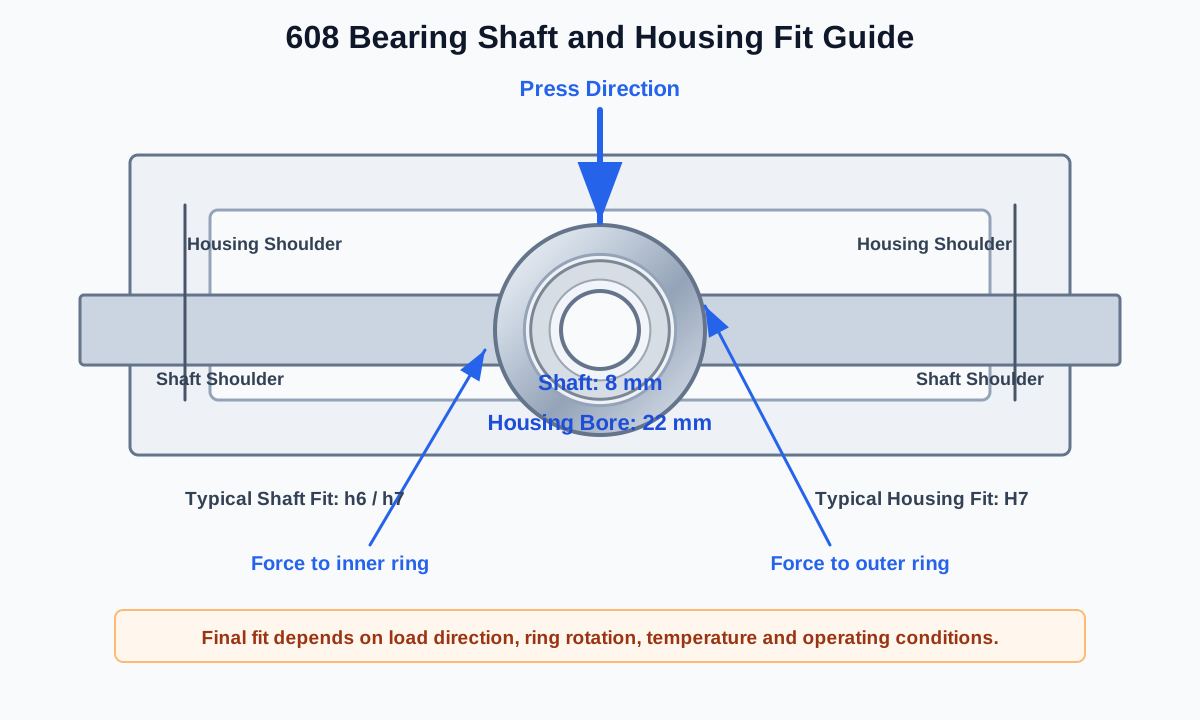
Proper shaft fit, housing fit, and internal clearance are essential for bearing performance.
Shaft and Housing Fit
Common reference tolerances may include:
- Shaft: h6 or h7
- Housing: H7
However, these should not be presented as universal rules.
The correct fit depends on:
- Which ring rotates relative to the load
- Load magnitude
- Shock and vibration
- Shaft material
- Housing material
- Operating temperature
- Required positioning accuracy
- Installation and removal requirements
A bearing ring subjected to a rotating load generally requires a more secure fit to prevent creeping.
An excessively loose fit can cause:
- Ring movement
- Fretting
- Noise
- Wear
- Loss of positioning accuracy
An excessively tight fit can cause:
- Reduced internal clearance
- Heat generation
- Increased friction
- Raceway deformation
- Premature fatigue
Internal Clearance
Common clearance classes include:
- C2: less than normal
- C0 or CN: normal clearance
- C3: greater than normal
- C4: greater than C3
Normal clearance is suitable for many standard operating conditions.
C3 clearance may be selected when:
- The inner ring uses a significant interference fit
- Operating temperature is elevated
- The inner ring becomes hotter than the outer ring
- Thermal expansion is expected to reduce operating clearance
C4 is intended for more demanding or specialized operating conditions and should not be selected without engineering justification.
Incorrect fit or clearance can lead to:
- Excessive heat
- Noise
- Reduced bearing life
- Cage damage
- Lubricant breakdown
- Bearing seizure
9. Lubrication Methods
Lubrication reduces friction, protects against wear, helps prevent corrosion, and carries heat away from rolling contacts.
Grease Lubrication
Grease is the most common lubrication method for 608 bearings.
Advantages include:
- Long lubrication intervals
- Simple sealing requirements
- Reduced leakage
- Low maintenance
- Suitability for pre-lubricated sealed bearings
However, excessive grease can increase churning resistance and temperature.
The appropriate grease depends on:
- Speed
- Temperature
- Load
- Seal compatibility
- Noise requirements
- Environmental exposure
Oil Lubrication
Oil lubrication may be used in higher-speed or continuously lubricated systems.
Advantages can include:
- Better heat removal
- Lower viscous resistance when properly selected
- Continuous contaminant removal in circulating systems
- Suitability for certain high-speed arrangements
Oil systems are generally more complex and may require:
- Reservoirs
- Pumps
- Oil seals
- Filters
- Monitoring
- Periodic maintenance
For most ordinary 608 bearing applications, pre-lubricated grease-filled ZZ or 2RS bearings are the simplest option.
Lubrication should never be selected by speed alone. Temperature, load, seal design, noise, expected life, and maintenance access must also be considered.
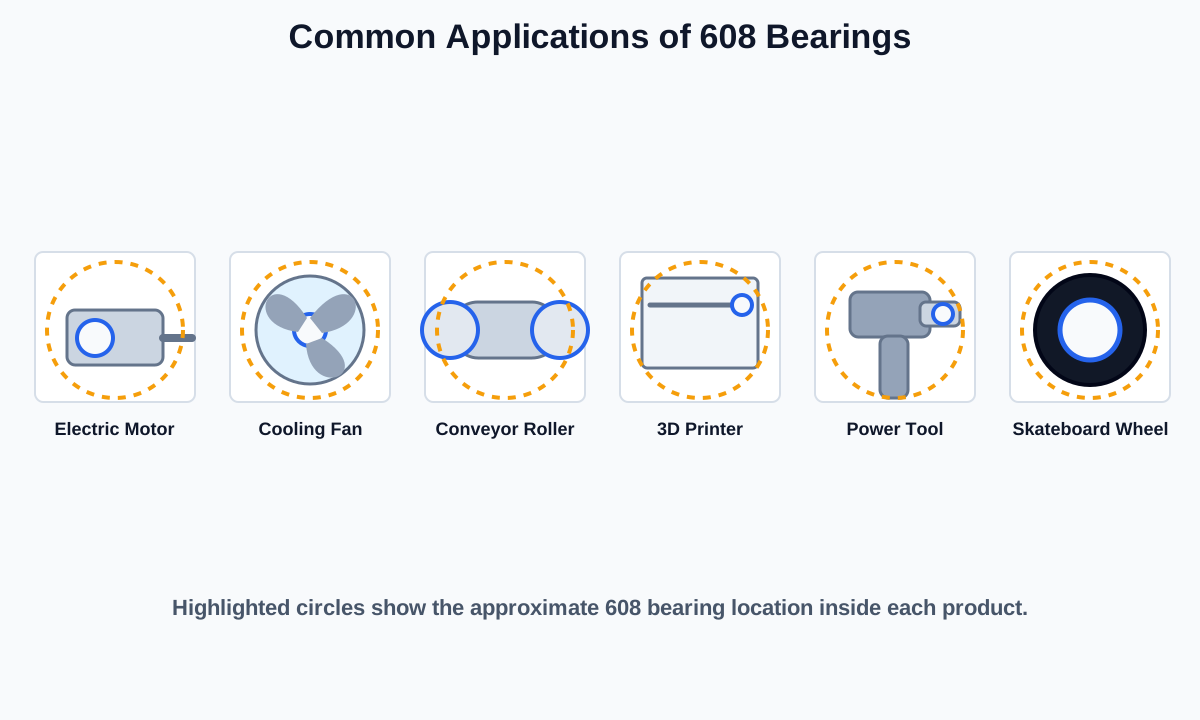
10. Common Applications of 608 Bearings
The 608 bearing is widely used because of its compact size, low friction, standardized dimensions, and broad availability.
Common applications include:
- Skateboards
- Inline skates
- Electric motors
- Cooling fans
- Power tools
- Conveyor rollers
- 3D printers
- Small pumps
- Household appliances
- Exercise equipment
- Robotics
- Automated machinery
- Small wheels and guide rollers
Skateboards and Inline Skates
The 608 bearing has become closely associated with skate wheels because its dimensions match many common wheel and axle systems.
For these applications, buyers often prioritize:
- Contamination resistance
- Low noise
- Smooth rotation
- Impact resistance
- Lubricant retention
Electric Motors and Fans
In electric motors and fans, the bearing supports the rotor or shaft while enabling smooth high-speed rotation.
Important requirements include:
- Low vibration
- Low noise
- Stable internal clearance
- Suitable grease
- Accurate raceway geometry
Power Tools
Drills, grinders, rotary tools, and compact machines may use 608 bearings in shaft-supporting positions.
Power-tool applications can involve:
- High rotational speed
- Shock loads
- Dust
- Vibration
- Frequent starts and stops
Conveyor and Automation Systems
608 bearings may be installed in rollers, guide wheels, small pulleys, and compact transmission mechanisms.
Industrial users should pay particular attention to:
- Continuous-duty life
- Contamination
- Lubricant stability
- Alignment
- Replacement consistency
11. 608 vs 607 vs 609 Bearings
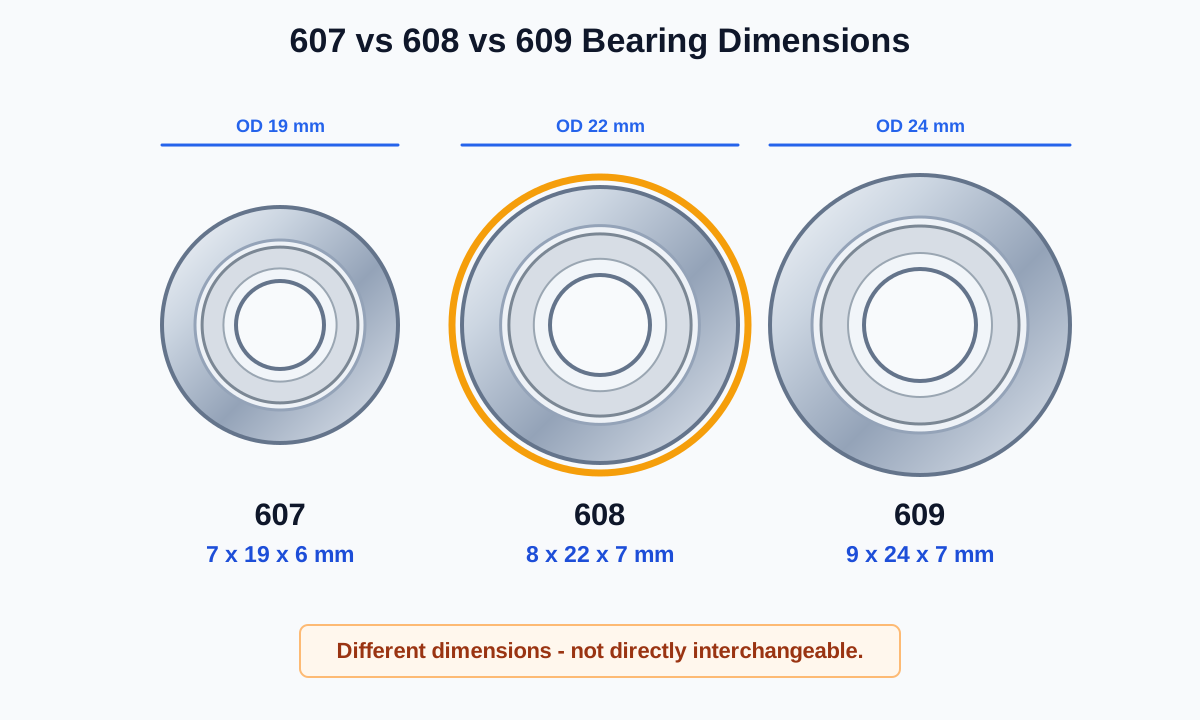
The 607, 608, and 609 are all small deep groove ball bearings, but they have different dimensions.
| Model | Bore | Outer Diameter | Width |
| 607 | 7 mm | 19 mm | 6 mm |
| 608 | 8 mm | 22 mm | 7 mm |
| 609 | 9 mm | 24 mm | 7 mm |
607 Bearing
Dimensions:
7 × 19 × 6 mm
The 607 is suitable for smaller shafts and more compact assemblies.
608 Bearing
Dimensions:
8 × 22 × 7 mm
The 608 is the most widely recognized of the three and is frequently used in motors, wheels, fans, tools, and rollers.
609 Bearing
Dimensions:
9 × 24 × 7 mm
The 609 accommodates a larger 9 mm shaft and has a larger outside diameter than the 608.
These bearings are not directly interchangeable.
Even where the width is the same, differences in the bore and outside diameter require different shafts and housings.
12. Bearing Cross Reference and Equivalent Bearings
608 bearings are produced by many global manufacturers.
Common designations may include:
- SKF: 608, 608-2RS1
- NSK: 608DDU
- FAG: 608-2RSR
- NTN: 608LLU
Cross-reference designations should be treated carefully because suffix meanings vary between brands.
A bearing that matches the 608 dimensions may still differ in:
- Seal design
- Contact pressure
- Internal clearance
- Grease type
- Noise grade
- Precision
- Load rating
- Speed rating
- Temperature capability
- Cage construction
Before substitution, verify:
- Nominal dimensions
- Closure type
- Clearance class
- Precision grade
- Material
- Load rating
- Speed rating
- Lubricant
- Operating temperature
- Application-specific approvals
Dimensional interchangeability does not always guarantee identical operating performance.
13. Common Failures and Troubleshooting
| Problem | Possible Cause | Recommended Action |
| Noise | Contamination, damage, poor lubrication | Inspect cleanliness and lubricant condition |
| Heat | Tight fit, overload, excessive grease | Check fit, load and lubricant quantity |
| Wear | Misalignment or lubrication failure | Correct alignment and improve lubrication |
| Corrosion | Water or chemical exposure | Improve sealing or choose stainless steel |
| Early fatigue | Excessive load or installation damage | Recalculate load and review mounting process |
Noise
Possible causes include:
- Dust or debris
- Insufficient lubrication
- Raceway damage
- Ball damage
- Incorrect preload
- Misalignment
A sealed bearing may help in contaminated environments, but replacing an open bearing with a 2RS version will not solve problems caused by poor alignment or incorrect fit.
Overheating
Possible causes include:
- Excessive interference
- Insufficient internal clearance
- Too much grease
- Excessive speed
- Overload
- Seal friction
- Shaft misalignment
The solution should be based on the actual cause rather than simply changing the bearing material.
Premature Wear
Possible causes include:
- Lubrication failure
- Abrasive contamination
- Shaft or housing movement
- Electrical current damage
- Incorrect handling
- Installation force transmitted through the rolling elements
Corrosion
Possible causes include:
- Moisture
- Condensation
- Chemical exposure
- Incompatible cleaning agents
- Damaged seals
Possible corrective actions include improved sealing, corrosion-resistant materials, better storage conditions, and suitable protective lubricants.
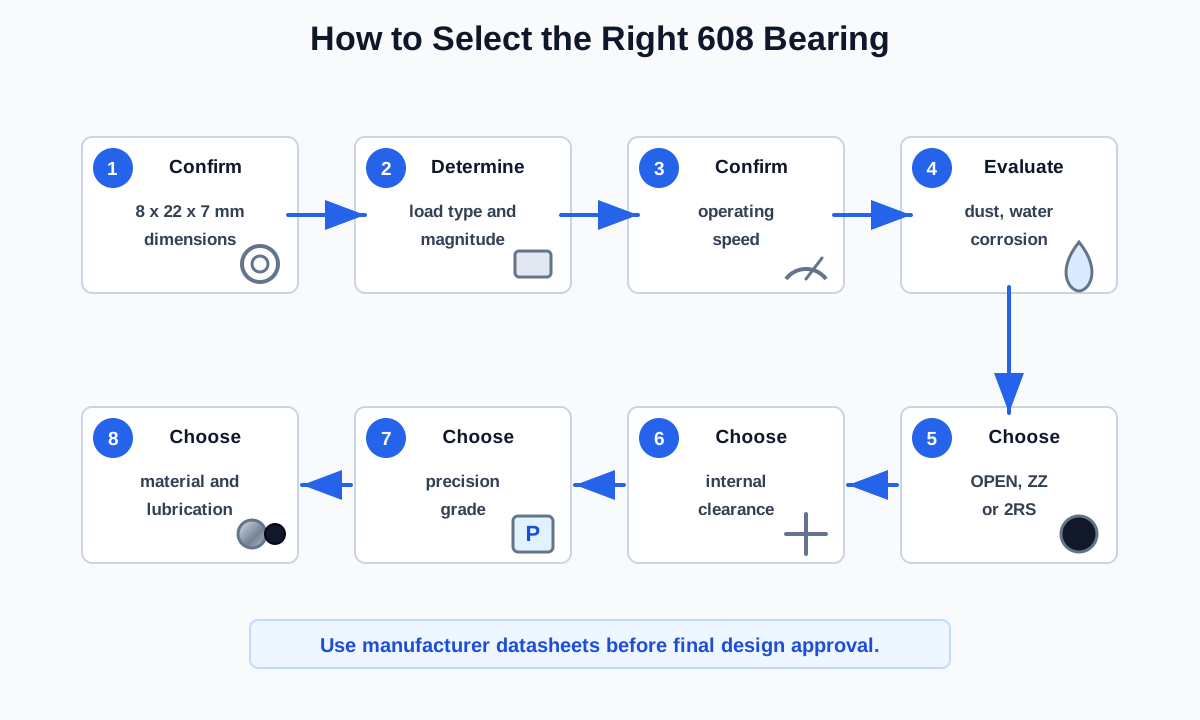
14. How to Select the Right 608 Bearing
Selecting a 608 bearing involves more than confirming the 8 × 22 × 7 mm dimensions.
Step 1: Confirm the Dimensions
Verify that the application requires:
- 8 mm shaft
- 22 mm housing bore
- 7 mm available width
Step 2: Determine the Load
Identify:
- Radial load
- Axial load
- Combined load
- Shock load
- Continuous or intermittent operation
Compare calculated loads with the manufacturer’s dynamic and static ratings.
Step 3: Confirm the Operating Speed
Determine:
- Normal speed
- Maximum speed
- Acceleration
- Duty cycle
- Expected temperature rise
Step 4: Evaluate the Environment
Consider:
- Dust
- Water
- Humidity
- Chemicals
- Cleaning procedures
- Outdoor exposure
- Food or medical requirements
Step 5: Select the Closure Type
General guidance:
- OPEN: clean, enclosed systems
- ZZ: low friction and moderate dust protection
- 2RS: stronger protection against contamination
Step 6: Select Internal Clearance
Choose between normal, C3, or other clearance classes based on:
- Interference fits
- Temperature
- Shaft speed
- Ring temperature difference
- Required noise level
Step 7: Choose the Material
General guidance:
- Chrome steel: standard industrial use
- Stainless steel: corrosive or humid environments
- Hybrid ceramic: specialized speed, electrical, or friction requirements
Step 8: Select Precision and Noise Grade
Higher precision may be necessary for:
- High-speed motors
- Precision instruments
- Low-vibration equipment
- Low-noise fans
- Accurate rotating assemblies
A higher ABEC grade does not automatically improve every application. Precision should match the actual operating requirement.
15. Choosing a Reliable Supplier
For industrial applications, supplier capability can have a direct effect on equipment reliability.
Important supplier evaluation points include:
- Quality-management certification
- Material traceability
- Heat-treatment control
- Dimensional inspection
- Noise and vibration testing
- Load-rating documentation
- Lubricant control
- Seal consistency
- Packaging quality
- Batch traceability
- Stable supply capacity
Buyers may request:
- Product datasheets
- Inspection reports
- Material certificates
- Samples
- Lubricant information
- Precision-grade confirmation
- Life-test information
- Packaging specifications
Low-cost bearings may appear interchangeable during initial inspection but perform differently under continuous load, high speed, temperature variation, or contamination.
A qualified supplier should be able to explain not only the bearing dimensions but also the design, material, lubrication, clearance, and recommended operating conditions.
16. Frequently Asked Questions
What are the dimensions of a 608 bearing?
A standard 608 bearing has an 8 mm inner diameter, 22 mm outer diameter, and 7 mm width.
Its dimensions are written as:
8 × 22 × 7 mm
What is the difference between 608ZZ and 608-2RS?
A 608ZZ bearing normally uses metal shields, while a 608-2RS bearing normally uses rubber seals.
608ZZ typically offers:
- Lower friction
- Good speed capability
- Moderate dust protection
608-2RS typically offers:
- Better contamination protection
- Better lubricant retention
- More seal friction
Are all 608 bearings interchangeable?
They are generally dimensionally interchangeable when they follow the same nominal size standard.
However, performance can differ because of:
- Seal type
- Clearance
- Precision
- Lubricant
- Material
- Load rating
- Speed rating
Which 608 bearing is best for high speed?
An open, shielded, or hybrid ceramic 608 bearing may be suitable for high-speed operation, depending on the specific system.
The best choice depends on:
- Manufacturer rating
- Lubrication
- Load
- Temperature
- Required contamination protection
A 608ZZ bearing is often selected as a compromise between relatively low friction and basic protection.
Is a 608 bearing suitable for axial loads?
A deep groove ball bearing can support moderate axial loads in both directions.
However, it is not designed to replace a dedicated thrust bearing in applications dominated by heavy axial loading.
What shaft size fits a 608 bearing?
The nominal bore is 8 mm, so the bearing is designed for an appropriately toleranced 8 mm shaft.
Can a 608 bearing be used outdoors?
Yes, but the material, seals, lubricant, and corrosion protection should match the environment.
A 608-2RS or stainless steel version may be more suitable than an open chrome steel bearing.
Does a higher ABEC rating mean a stronger bearing?
No.
ABEC ratings primarily relate to dimensional and rotational accuracy. They do not directly indicate higher load capacity, stronger seals, better corrosion resistance, or longer life under every operating condition.
Final Summary
The 608 bearing is one of the most versatile and widely used miniature deep groove ball bearings.
Its standardized dimensions are:
- 8 mm inner diameter
- 22 mm outer diameter
- 7 mm width
However, dimensions alone are not enough to ensure the correct selection.
Engineers and buyers should also consider:
- Load
- Speed
- Seal type
- Operating environment
- Material
- Internal clearance
- Shaft and housing fit
- Lubrication
- Precision
- Supplier quality
An open 608 bearing may provide the lowest friction in a clean system. A 608ZZ bearing may offer a useful balance between speed and protection. A 608-2RS bearing may be preferred where dust, moisture, or lubricant retention is more important.
Chrome steel is suitable for most standard industrial uses, while stainless steel and hybrid ceramic versions address more specialized requirements.
A properly selected and correctly installed 608 bearing can provide smooth operation, low friction, reliable performance, and long service life across consumer, commercial, and industrial machinery.
