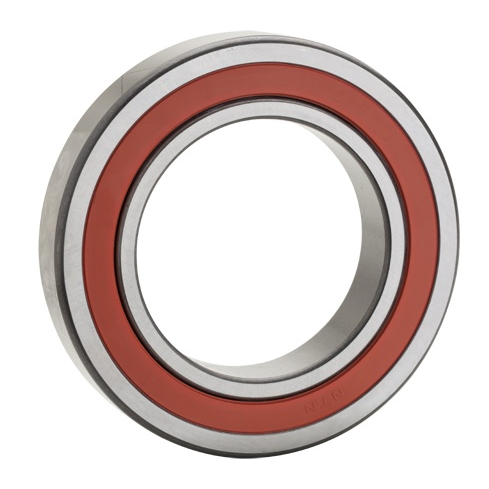
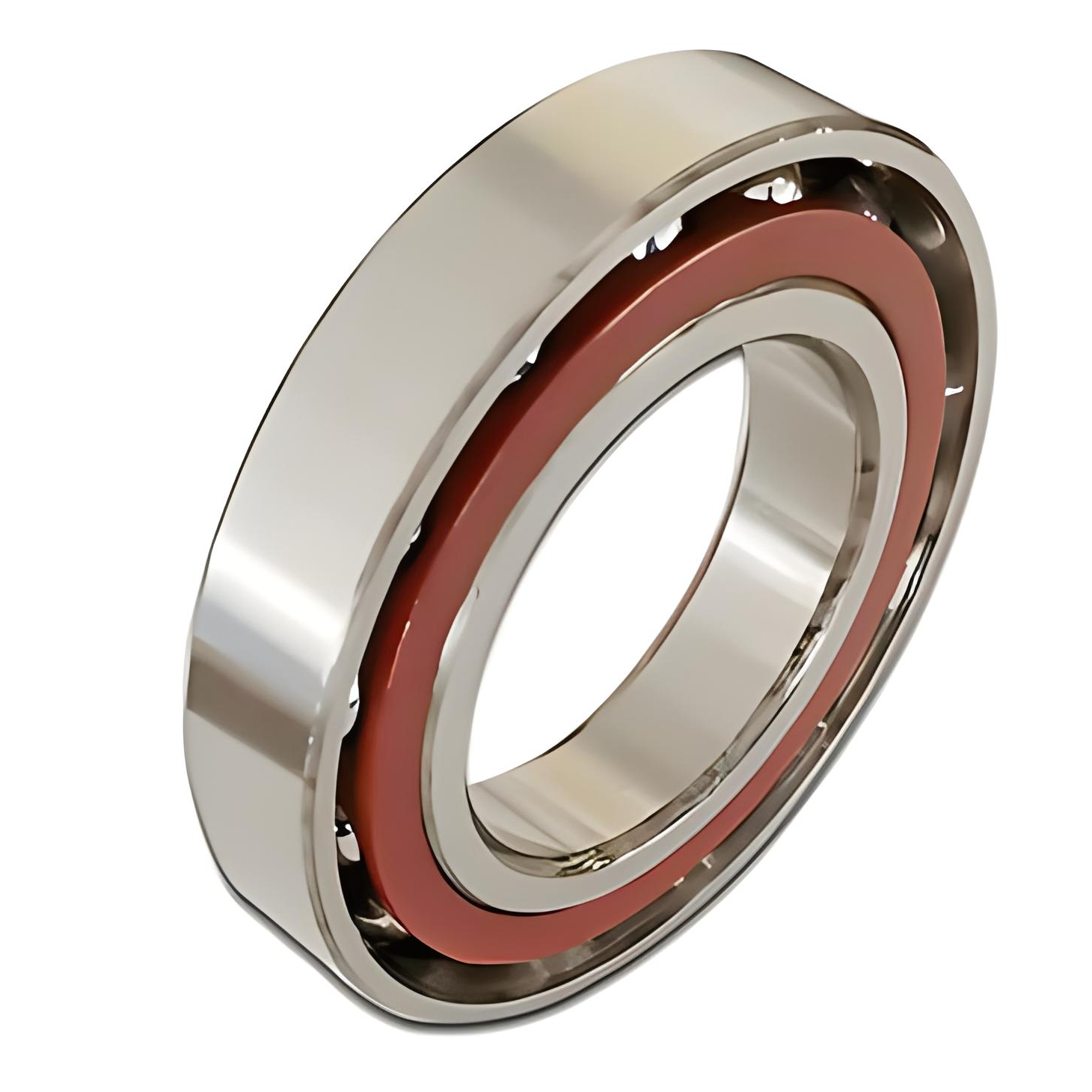
7204 CD/P4ADGB is a super-precision angular-contact ball bearing. The configuration identifies enclosure Open and load direction Angular Contact. Its useful selection features are the contact arrangement, mating dimensions and actual component configuration. Read these together: a change in enclosure, clearance or material combination can matter even when two bearings share the same bore. The required reaction and the installed running condition should guide the comparison.
Contact Arrangement and Structural Reaction
7204 CD/P4ADGB belongs to the super-precision angular-contact family. Its inclined contact geometry connects axial reaction with radial support. The practical arrangement must control seat accuracy, contact orientation and internal setting together. The family name is not a numerical precision, speed or stiffness guarantee, and it does not independently identify how many ball rows or matched bearings are supplied.
The contact angle, matching scheme and preload must be established for the ordered configuration. They affect force sharing and the way thermal change reaches the contacts. A high-accuracy bearing can still run poorly on a distorted seat or with an unsuitable axial setting. Compare the actual support geometry and working load before selecting a companion bearing or an installation method. Additional contact entries are Ball Qty: 11 and Ball Dia: 7.938 mm. These are not alternative bore or outside-diameter values.
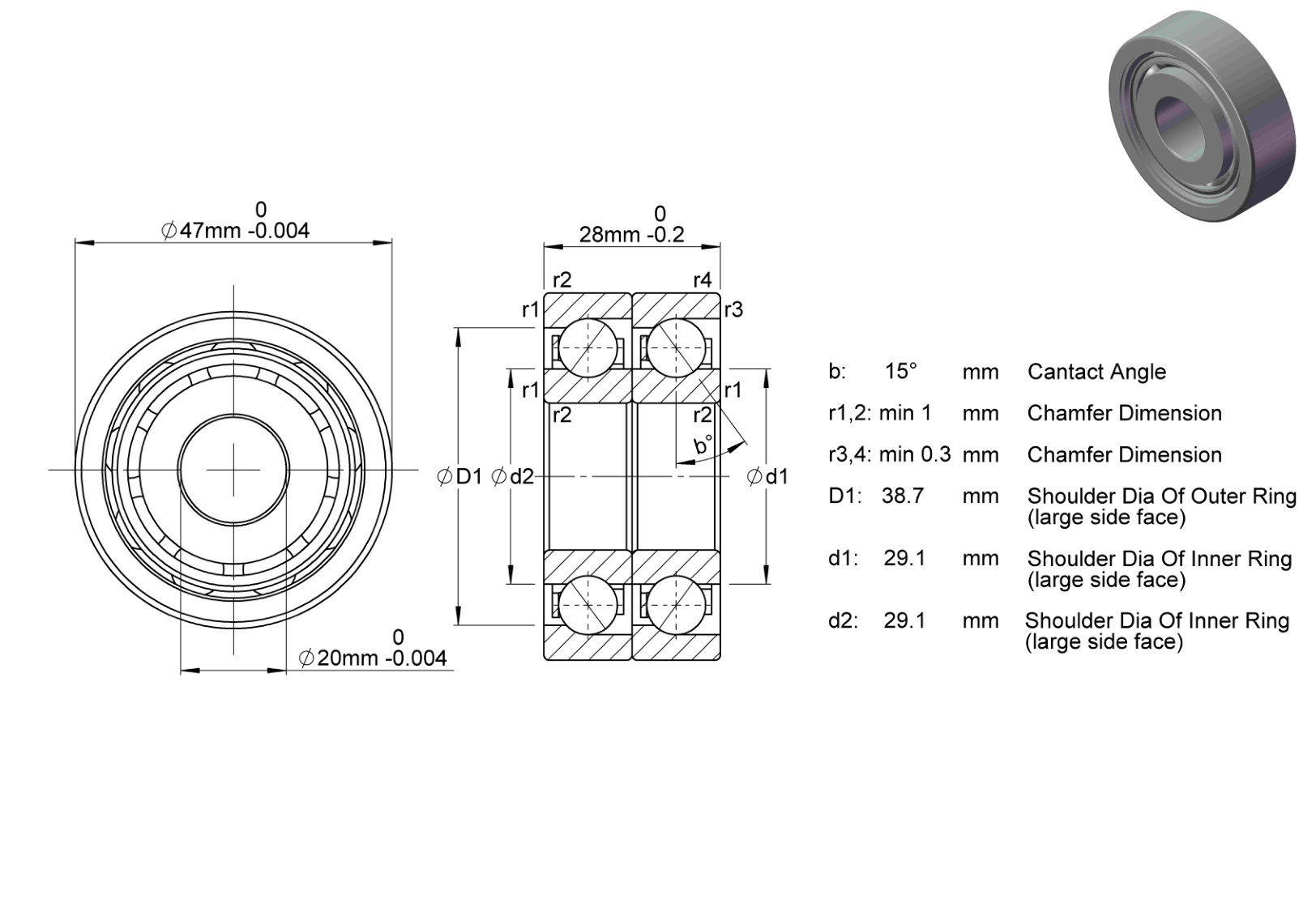
The angular configuration lists contact angle 15°, matched arrangement Universal matching, preload Light / Class B, bearings in matched set 2, and universal-matching entry Yes, back-to-back (<>), face-to-face (><) or tandem (>>). Preserve these as separate, coordinated requirements. A matching designation does not set a preload force, and the number in a matched set is not a rolling-element row count. Available or No entries are not installed settings. Verify the orientation, companion reaction and axial setting required by the exact arrangement rather than inferring them from a model suffix.
Precision and Installed Internal Condition
The internal-condition entries are precision notation P4A. Precision and clearance answer different questions: geometric control is not the amount of internal freedom between rolling elements and raceways. Preserve the stated notation without converting between ABEC, ISO or manufacturer-specific classes. An apparently similar designation should not be assumed equivalent without the applicable definition.
Installed running clearance can differ from initial clearance. Interference at a seat, a temperature difference between the rings and the load applied to the assembly can change the contact condition. Seat roundness and shoulder runout also influence alignment. Check these relationships together when judging starting torque, stiffness or heating. Neither a precision label nor a clearance code independently guarantees the accuracy of the completed mechanism.
Package Dimensions and Fit Relationships
The main package dimensions are bore 20 mm, outside diameter 47 mm, and width 28 mm. Treat the shaft, housing and available axial space as a coordinated set of interfaces. Shoulder positions and clearances need to accommodate the actual bearing form without interfering with moving parts. Matching a bore alone does not establish replacement compatibility or the required installed fit.
Dimensional limits include bore tolerance -0.004mm to 0, outside diameter tolerance -0.004mm to 0, and width/height tolerance -0.2mm to 0. These limits describe the bearing interfaces, not a ready-made shaft or housing machining instruction. Account for which ring rotates relative to the load, the stiffness of its seat and temperature differences in service. The completed fit must preserve alignment and the intended clearance rather than merely accept assembly.
Material Combination and Environmental Selection
The component specifications identify ring material Chrome Steel, rolling-element material Chrome Steel, and cage material Phenolic. Each material belongs to its own role. A ring specification does not identify the balls or cage, and a ceramic-ball entry does not make the ring ceramic. Keep the complete material pair visible when comparing contact behavior and thermal response.
Environmental selection requires the stated alloy and actual exposure conditions, not a broad bearing-family name alone. Heat treatment, surface condition, lubricant and the mating material influence the contact system. Assess the operating medium and contamination alongside the mechanical duty. Avoid extending an alloy designation into a chemical-service qualification or a universal corrosion guarantee; the ordered component combination and application conditions must support that assessment. No corrosion, electrical, chemical, food, medical, marine, or other application qualification is implied without explicit supporting data.
Interpreting Load and Operating Data
Published load data include dynamic radial rating 4388 lbf and static radial rating 2610 lbf. Dynamic and static ratings serve different checks. Rotating fatigue assessment uses the dynamic basis, whereas the static basis addresses contact deformation under stationary, peak or slowly moving loading. Neither is a permitted operating load without consideration of load combination, duty, shock and the required reliability.
Other operating entries include maximum-speed entry 100.5 under the stated ×1,000 rpm convention and temperature entry – 30°C to 110 °C. Keep reference conditions separate from maximum limits. Lubrication, enclosure drag, load and heat removal interact in service, so one listed operating value cannot establish the performance of the whole machine. Use the actual duty and installed condition when checking the selected bearing.
Enclosure and Lubricant Condition
7204 CD/P4ADGB is open. Protection and lubricant retention must therefore be provided by the surrounding design. Consider how particles or process fluids could reach the rolling contacts and how lubricant is supplied during motion. Open construction can simplify access to the contact space, but it is not evidence of dry-running capability or permission to operate without contamination control.
The lubrication condition is Lubricated. Preserve that condition when specifying or replacing the bearing. Film formation and heat generation depend on speed, load, temperature and the contact materials. The lubricant must suit the enclosure and replenishment arrangement. A condition label does not set viscosity, fill quantity or a service interval; those choices must follow the complete duty and the lubricant system.
Seat Support and Assembly Control
Set the angular-contact orientation to suit the working thrust direction and the full bearing arrangement. Keep ring seats and shoulders accurate, clean and square. A press-fit force should pass through the ring being installed, not through the balls. Any matching or preload requirement belongs to the specified arrangement and must be checked before the axial setting is established.
Evaluate the companion reaction, support stiffness and the installed axial condition together. Shoulder runout or ring distortion can change the contact pattern and heat generation. Check free rotation and the intended setting after assembly rather than assuming that nominal dimension agreement has preserved the original running condition. Control alignment at both seats so the arrangement works as designed.
Configuration-Level Selection
7204 CD/P4ADGB may be considered in rotary supports needing controlled angular contact, accurate seats and a verified internal setting. This is a general mechanical context, not approval for a named application. Establish the load direction and duty before comparing the exact interfaces, contact arrangement and internal condition. The surrounding structure must support the intended reaction without imposing an incompatible fit or contact condition.
A useful replacement comparison keeps the complete configuration visible. Check the material of each working component, the ordered enclosure and lubricant, applicable ratings and dimensional limits. Relate those entries to mounting support, thermal change and the running condition. Neither a shared family label nor a familiar model designation proves compatibility, guaranteed life or an unstated performance class.