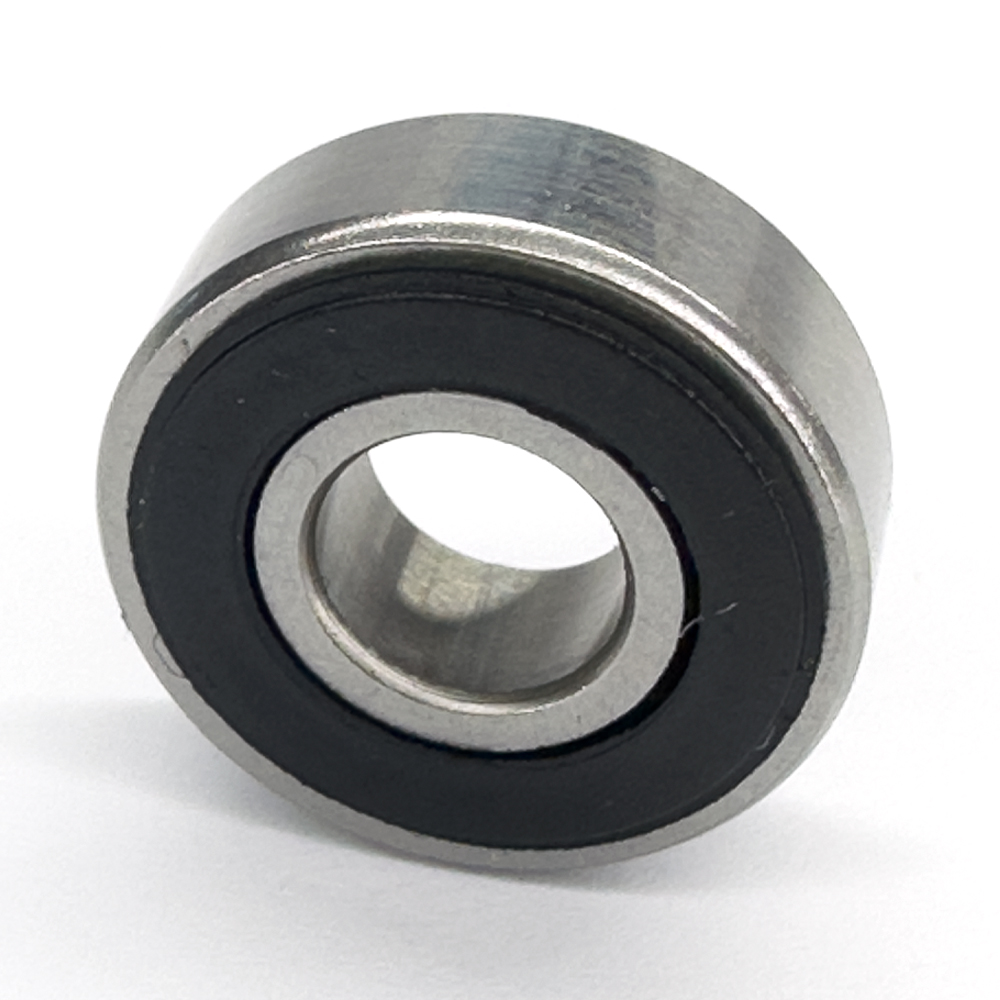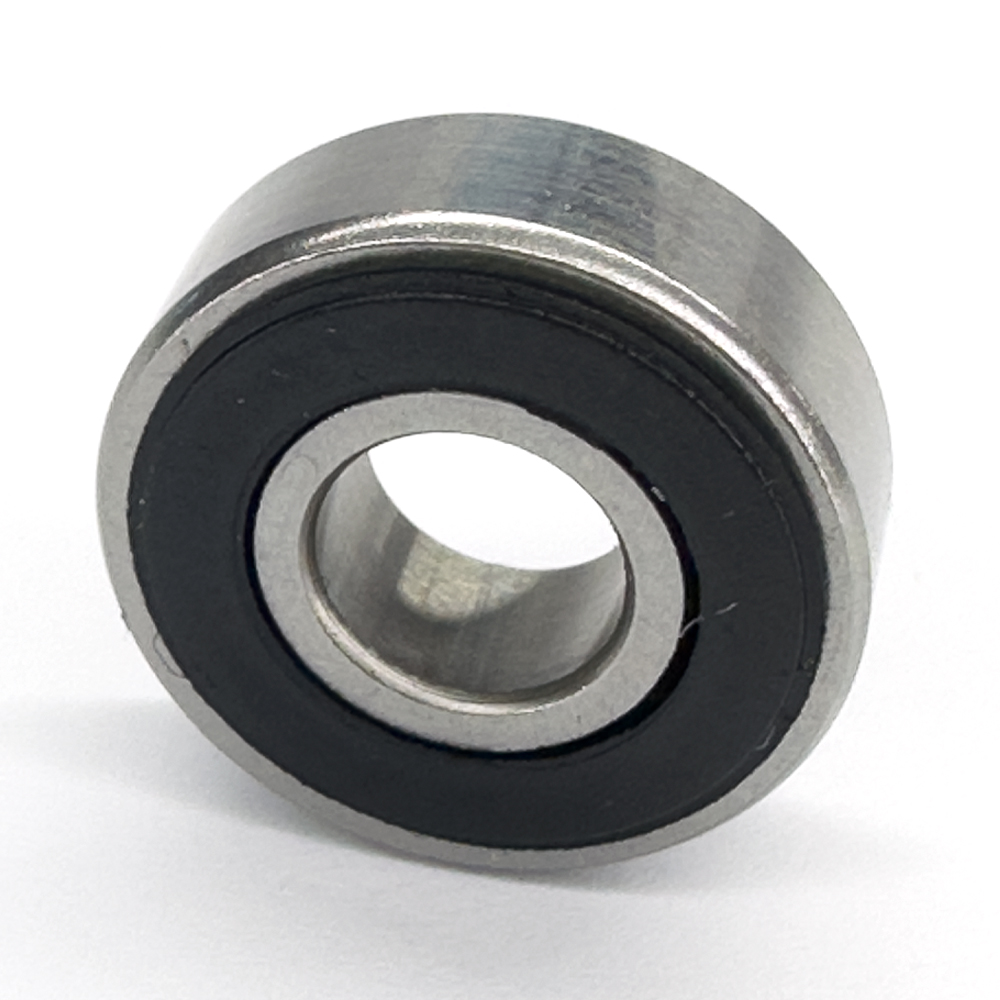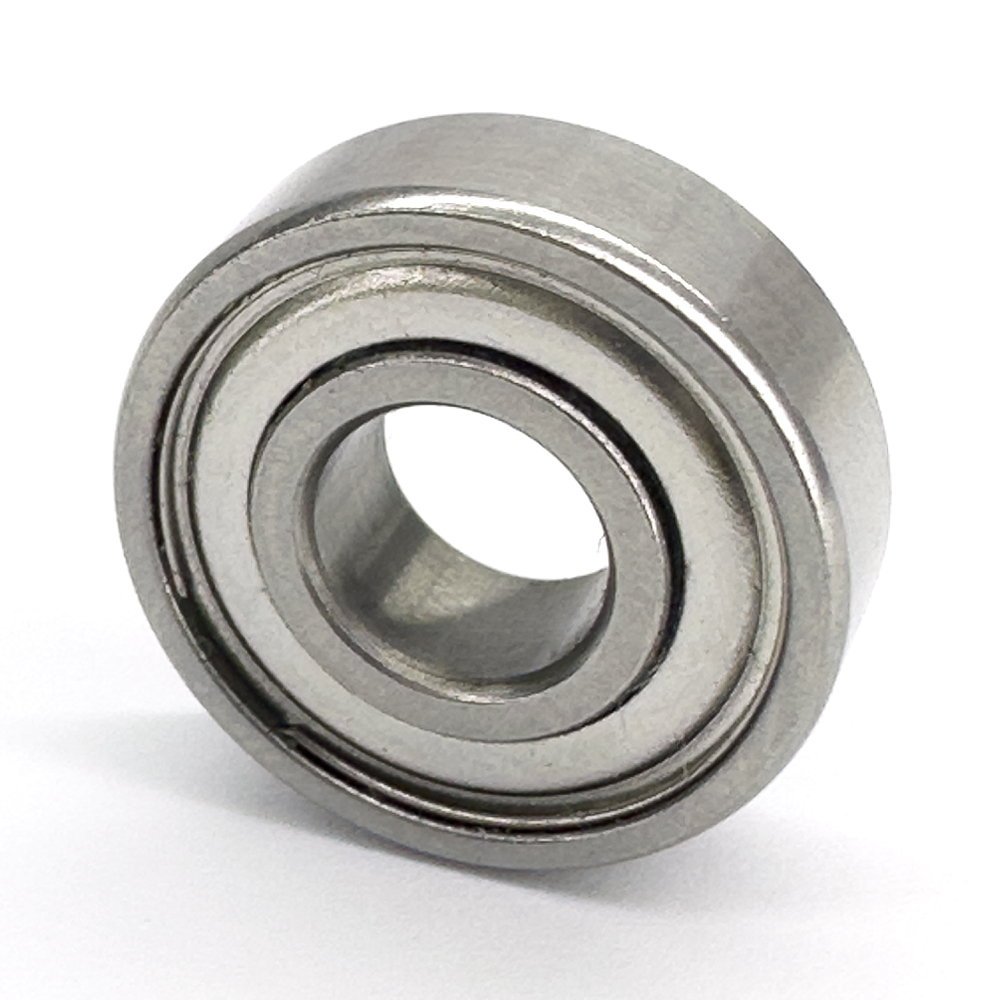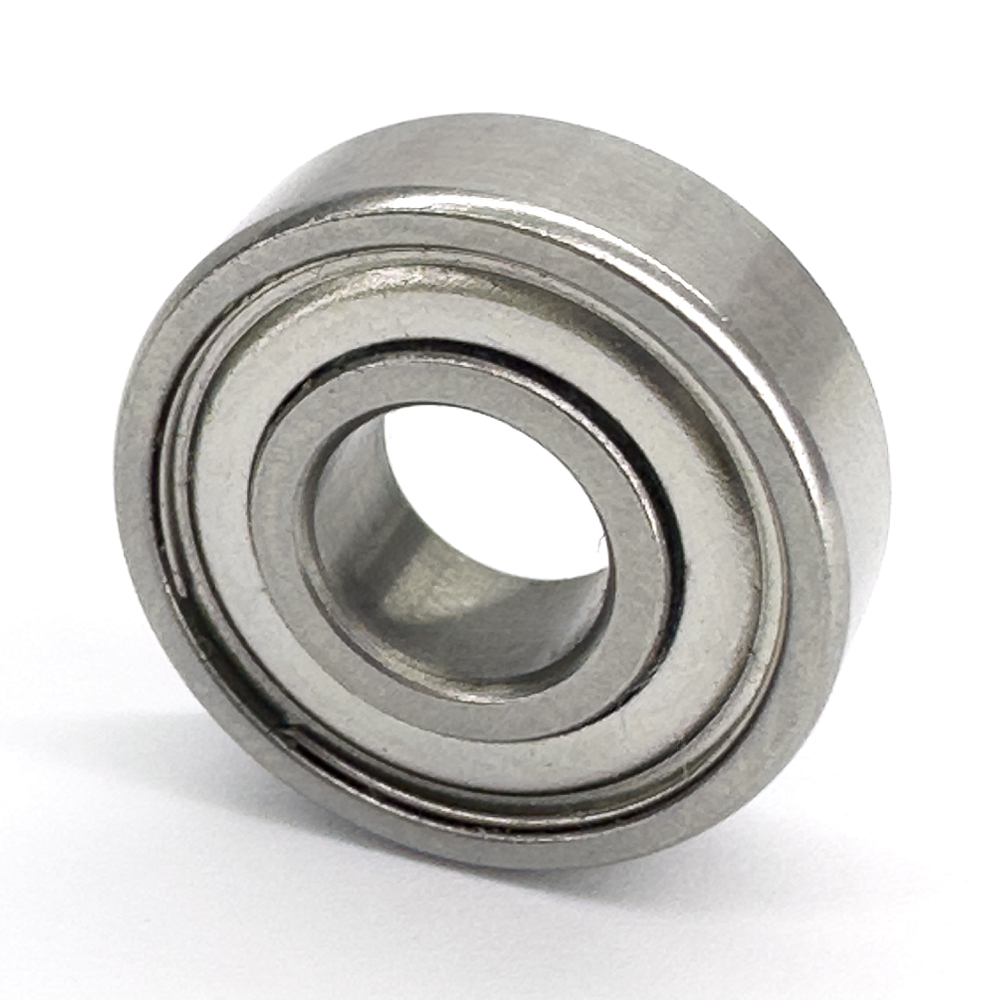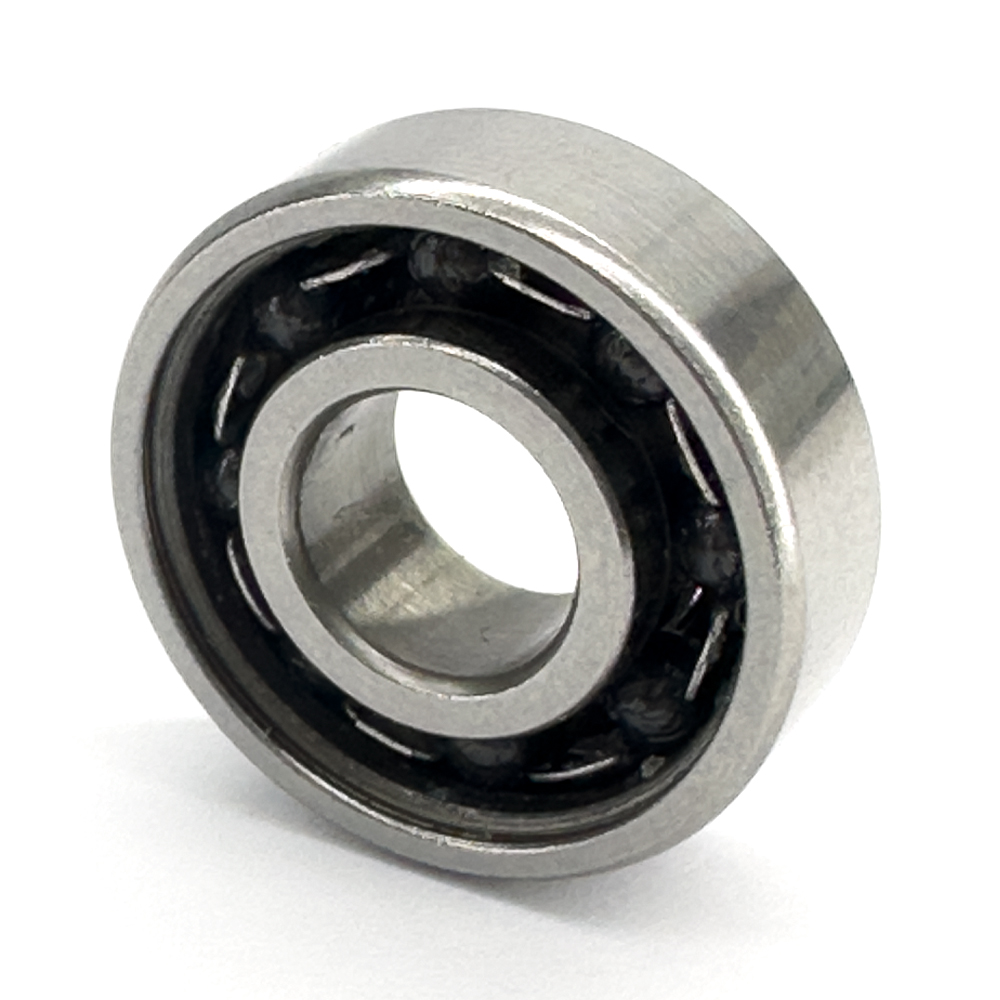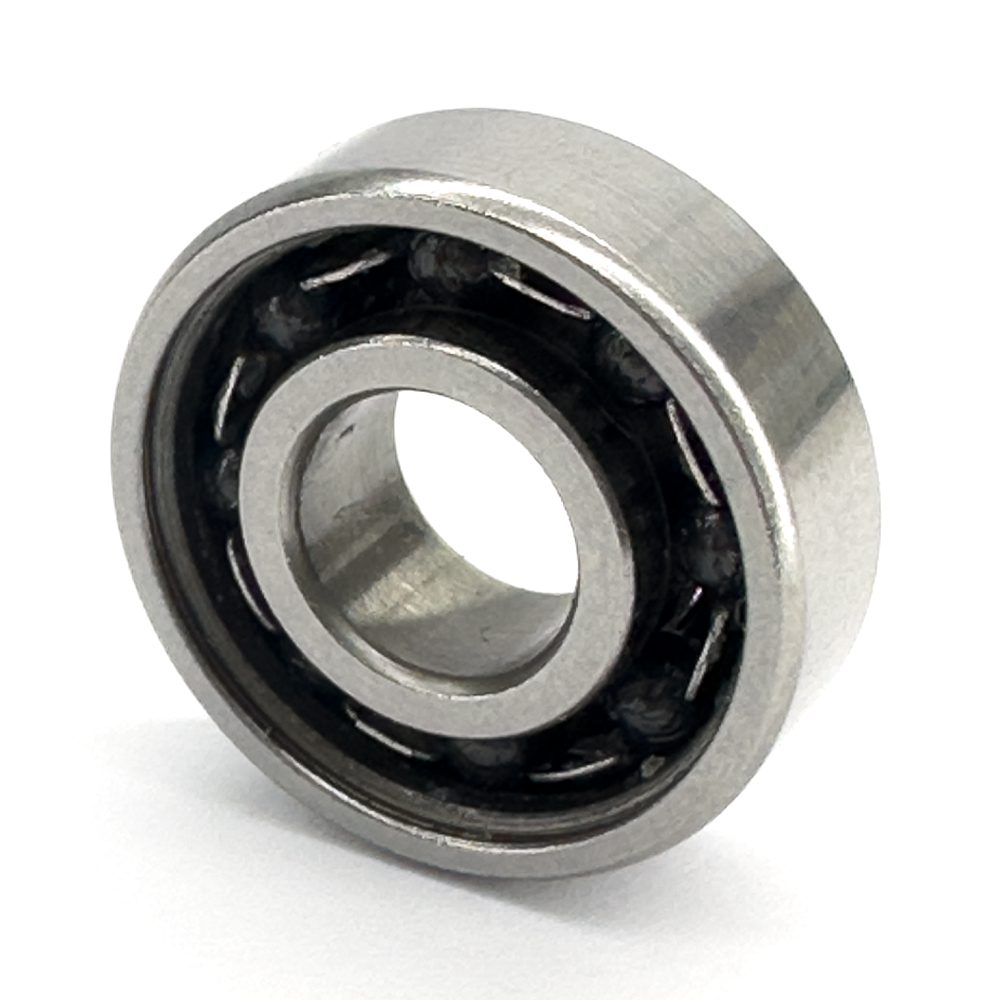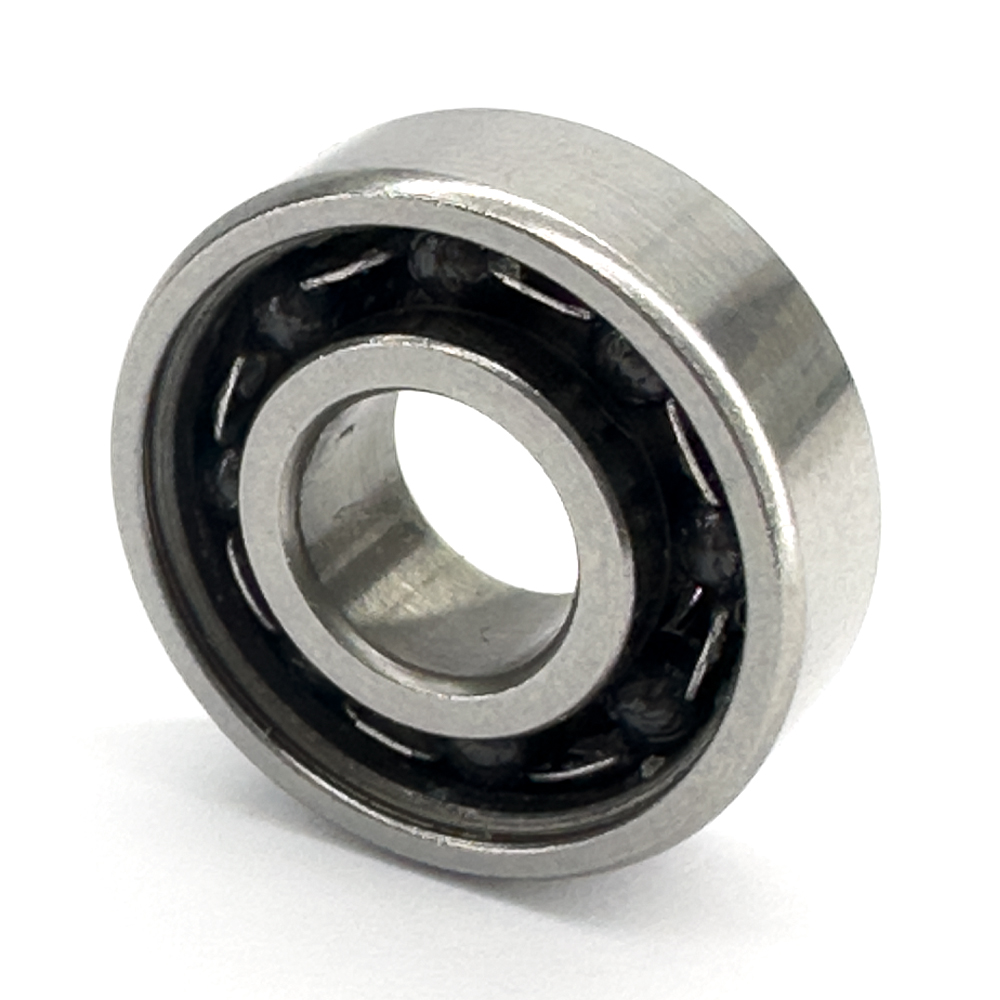
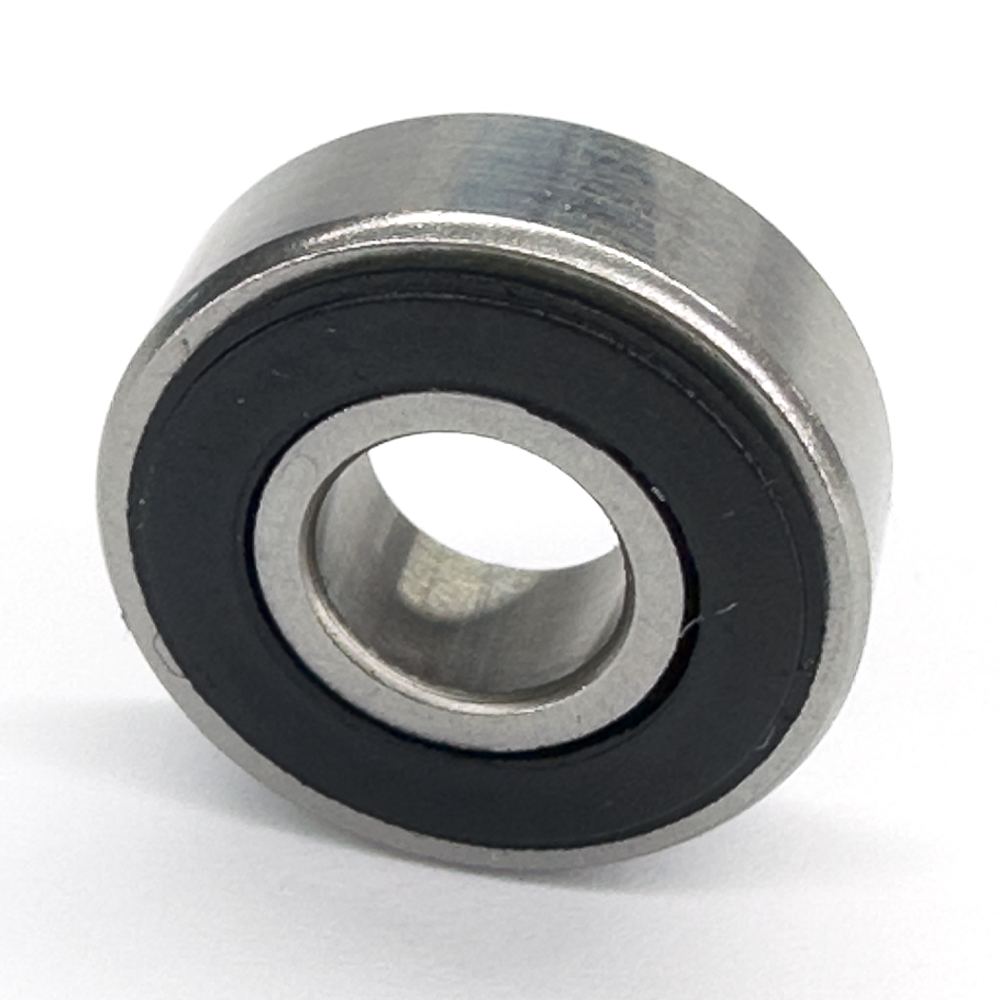
603 2rs is a miniature ball bearing. Its sealed configuration is an important part of fitting compact radial support into the surrounding lubrication and contamination-control arrangement. The bore, outside diameter and width must work with the available installation space, while the load data and operating configuration must be assessed against the same duty conditions.
Fit Starts with the Complete Envelope
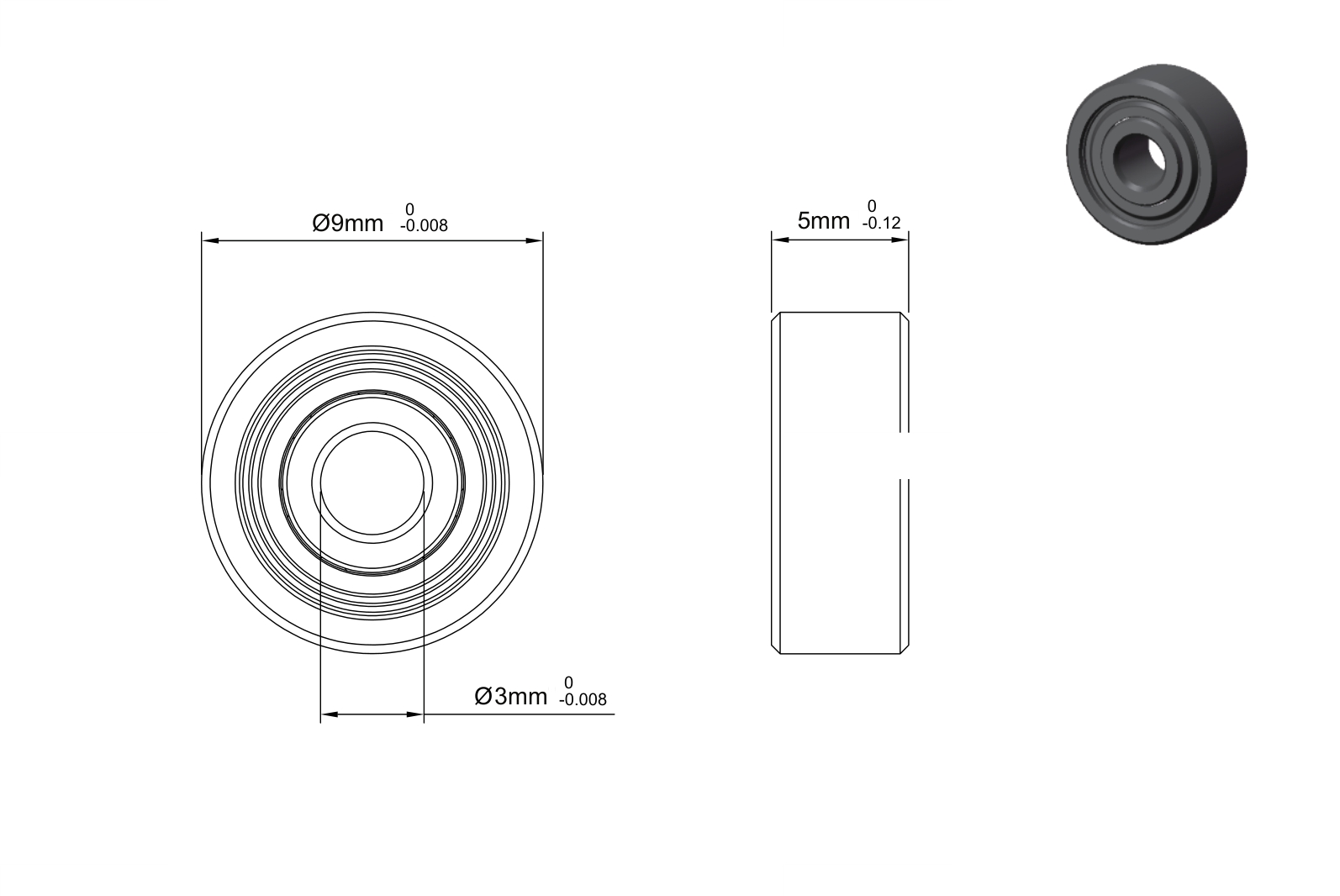
The metric dimensions of 603 2rs include a bore of 3 mm, outside diameter of 9 mm, width of 5 mm. These dimensions locate the shaft interface, housing interface and axial envelope. All must be checked together: matching the bore alone leaves the housing diameter and axial space unresolved. The surrounding shoulders and adjacent parts must also allow the bearing to seat without interference or ring distortion.
The dimensional tolerance limits are bore: -0.008mm to 0; outside diameter: -0.008mm to 0; width: -0.12mm to 0. Keep each limit attached to its own dimension when checking the mating parts. A dimensional tolerance is not an installed clearance value. Shaft and housing sizes determine the actual fit, so their tolerances must be assessed alongside the bearing limits rather than treating every nominally matching part as equivalent.
Materials in the Rolling Contacts
For 603 2rs, the ring material is Chrome Steel, ball material is Chrome Steel, cage material is Stainless Steel. Keep these component roles distinct when comparing alternatives. A cage material is not a raceway material, and the material of the balls cannot be used to describe every part of the bearing. The combination needs to suit the intended contact, lubrication and environmental conditions.
Material choice matters through the interaction of rolling contact, thermal expansion and lubrication. Different cage and rolling-element combinations can change mass and heat response in general, without establishing a guaranteed performance result for this assembly. Evaluate the selected combination under the intended load, speed and temperature, rather than treating the material designation as a substitute for an operating assessment.
Load Path Through the Assembly
603 2rs uses a single row radial ball-bearing arrangement. The balls transfer force between the inner and outer raceways, with the cage maintaining separation as they circulate. Its ball complement is 6. The radial load direction identifies the main support function. It does not establish a separate axial rating, so any combined loading needs an appropriate application check.
The compact raceway geometry makes the quality of the surrounding support important. Shaft alignment, housing concentricity and square seating faces help avoid uneven contact loading. Excessive interference or local deformation can change the internal running condition, even when the bearing itself is correctly specified. Evaluate the load path through the shaft and housing as well as through the bearing contacts.
Precision Is Distinct from Clearance
The precision class for 603 2rs is ABEC1. Radial clearance is 0.002mm to 0.013mm, designated MC3. This is the supplied bearing clearance, not a calculated running clearance after fitting. Interference and temperature differences between the rings can change the internal setting. Evaluate these effects with the selected fits rather than assuming that the initial condition will remain unchanged.
Accuracy in the assembled mechanism also depends on the journals, housing seats and locating faces. Roundness, concentricity, shoulder runout and cleanliness can affect how well the bearing’s own precision is used. Controlled fitting helps avoid local deformation or unintended preload. Check the final alignment and running condition together with the bearing specification instead of relying on the precision class alone.
Load, Speed and Thermal Relationships
The load data for 603 2rs include a dynamic radial rating of 52 lbf and a static radial rating of 34 lbf. Dynamic and static ratings serve different checks. The dynamic value supports life-related evaluation under rotating load; the static value addresses contact deformation under stationary or high loading. Neither is an application allowable load by itself. Applied force, direction, shock, duty cycle and the intended reliability must be considered before deciding whether the bearing meets the design requirement.
The maximum-speed entry is 56 × 1,000 rpm. The temperature range is -30° to 110 °C. Load, lubrication, enclosure, fit and heat removal interact during operation. A speed limit should not be read as a guaranteed machine speed under every load or thermal condition. Expansion of the shaft, housing and bearing can change the internal setting, so the dimensional and thermal assessments need to address the same operating case.
Lubricant Retention and Protection
The enclosure entry for 603 2rs is Sealed. The enclosure material entry is Nitrile Rubber. Sealing helps manage lubricant retention and direct ingress relative to open construction. The enclosure still needs to be evaluated with temperature, friction and the severity of external exposure. Its identity does not provide an ingress-protection rating or a guaranteed maintenance interval.
Lubrication for 603 2rs is listed as required. This does not identify a factory grease fill or authorize dry operation. Select lubricant type, viscosity and delivery method with regard to load, rotational speed, temperature and enclosure. The lubricant must also be compatible with the cage and any closure materials. Replenishment and cleanliness requirements belong to the actual operating arrangement.
Installing the Selected Construction
During installation of 603 2rs, direct force through the ring or washer being fitted instead of through the ball contacts. Prepare clean mating surfaces and remove burrs that would prevent square seating. Select interference and assembly method with the actual support material, geometry and thermal conditions in mind. Excessive fitting force or deformation can alter the running condition before the mechanism is put into service.
For this construction, check axial location, alignment and the absence of ring distortion. Verify free rotation after assembly and investigate binding rather than assuming it will disappear during running. At miniature scale, a small particle or seating error can be significant relative to the contact geometry. Careful handling, clean support surfaces and controlled location help preserve the intended load path without prescribing an unsupported fit class or clamping value.
What Matters in Replacement Selection
At family level, this construction can be considered in instrument shafts, compact motors and small rotary mechanisms. These examples do not establish compatibility with a particular machine. Selection still requires the actual loading, speed, temperature, available support and lubrication arrangement to agree with the chosen bearing configuration. Compare meaningful differences between alternatives, not just the model designation or bore size.
The selection of 603 2rs should bring radial support, enclosure and the complete dimensional envelope into the same assessment as load, lubrication and operating conditions. A nominal size match is only one part of that decision. Confirm the configuration and mating interfaces together so that an alternative does not change the mechanical arrangement on which the design depends.