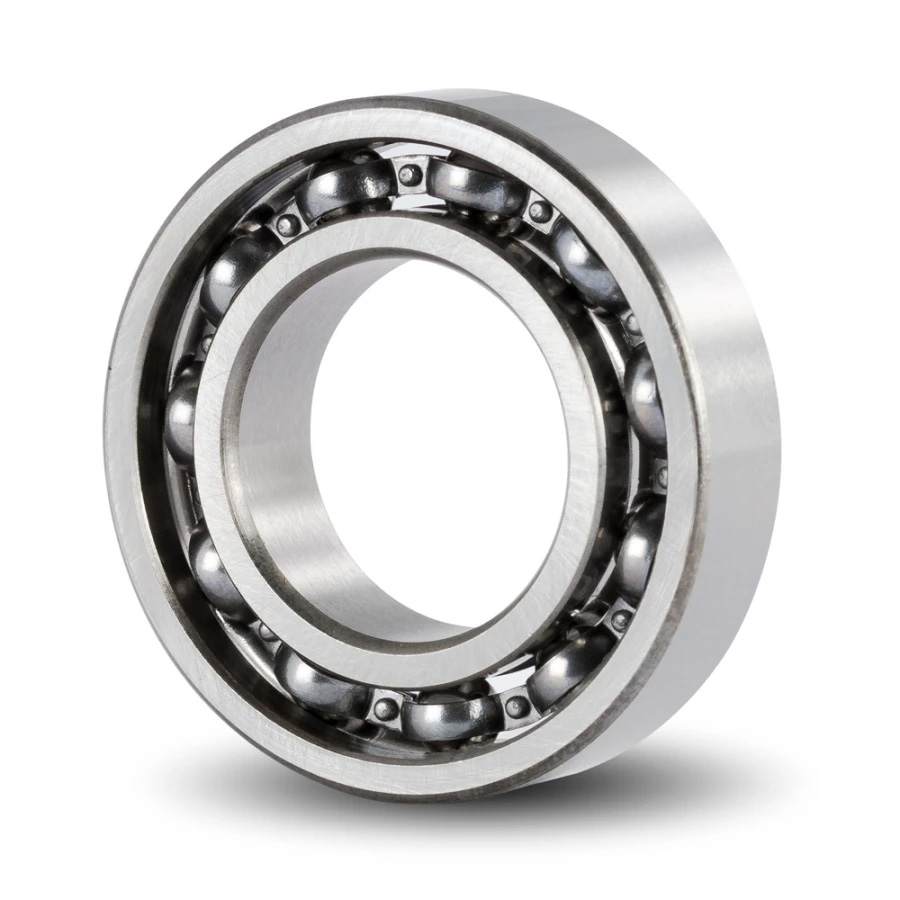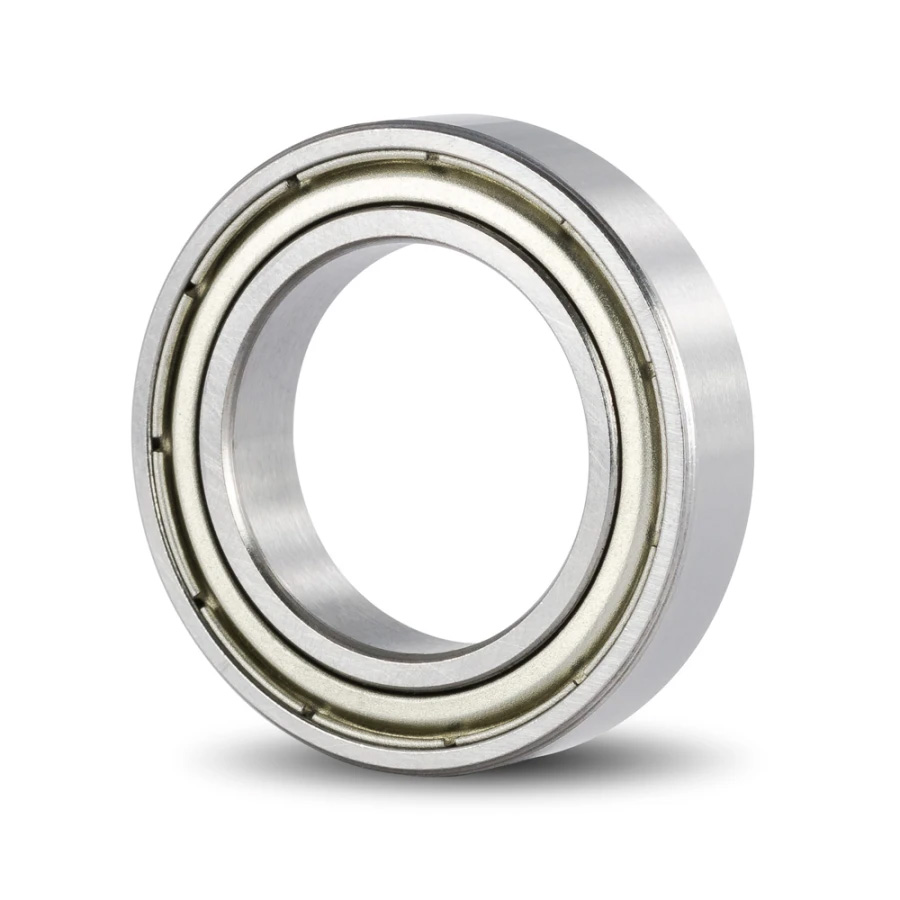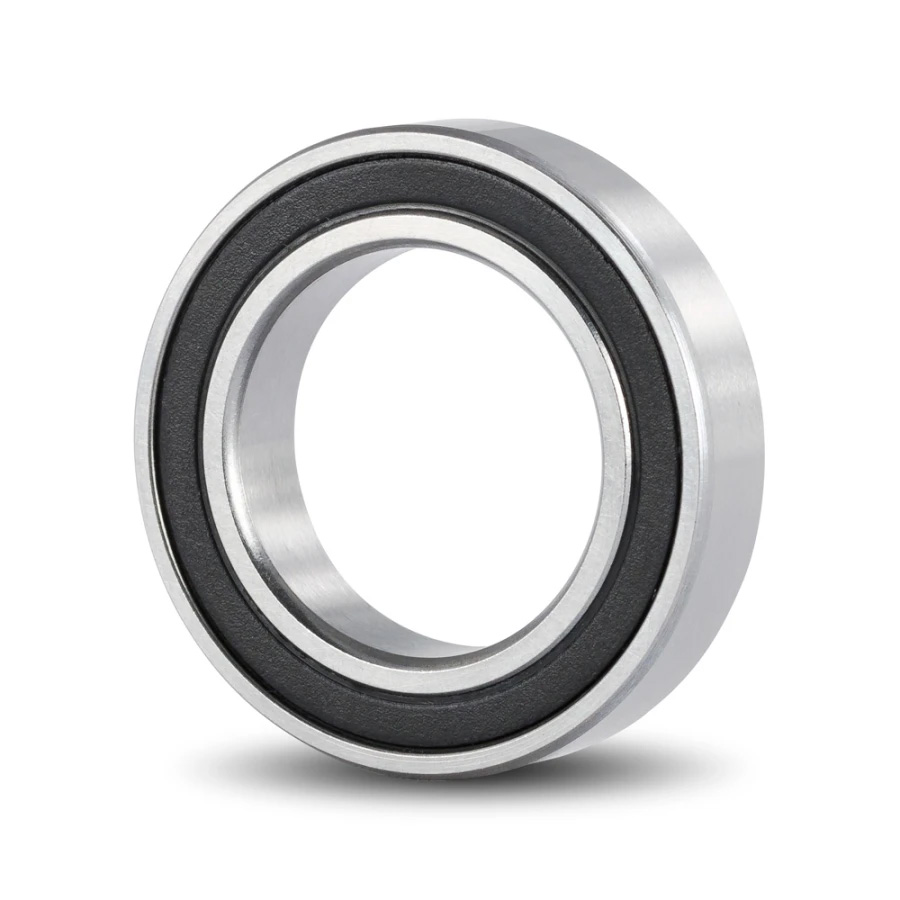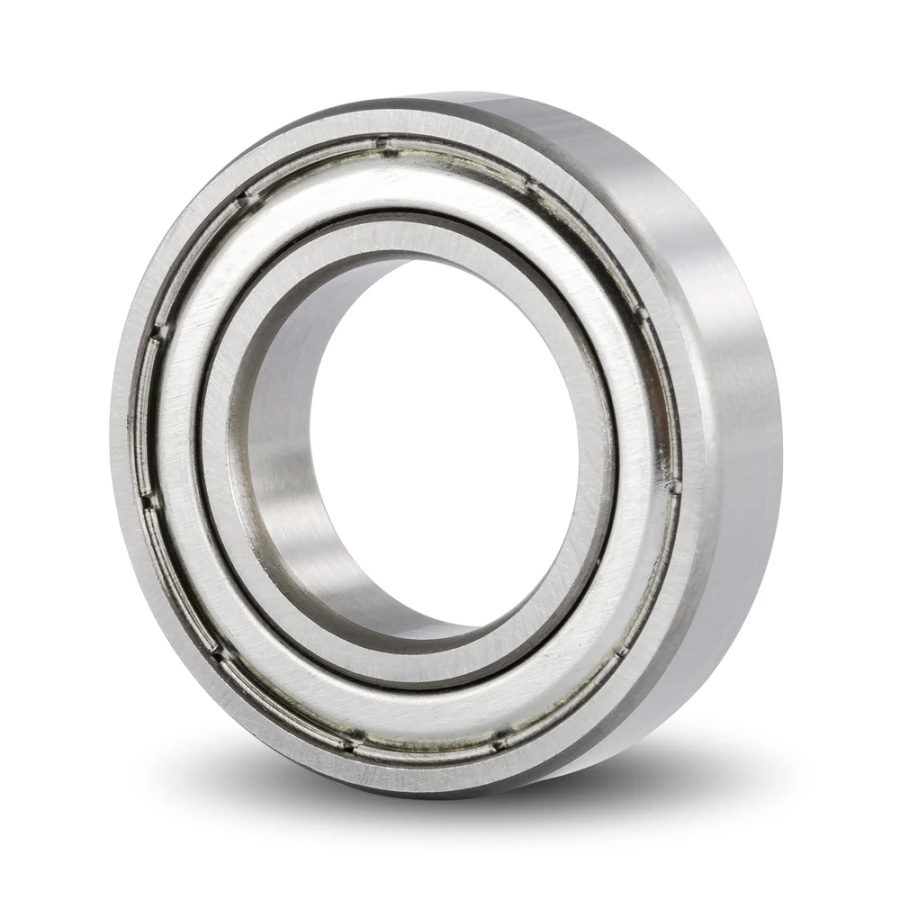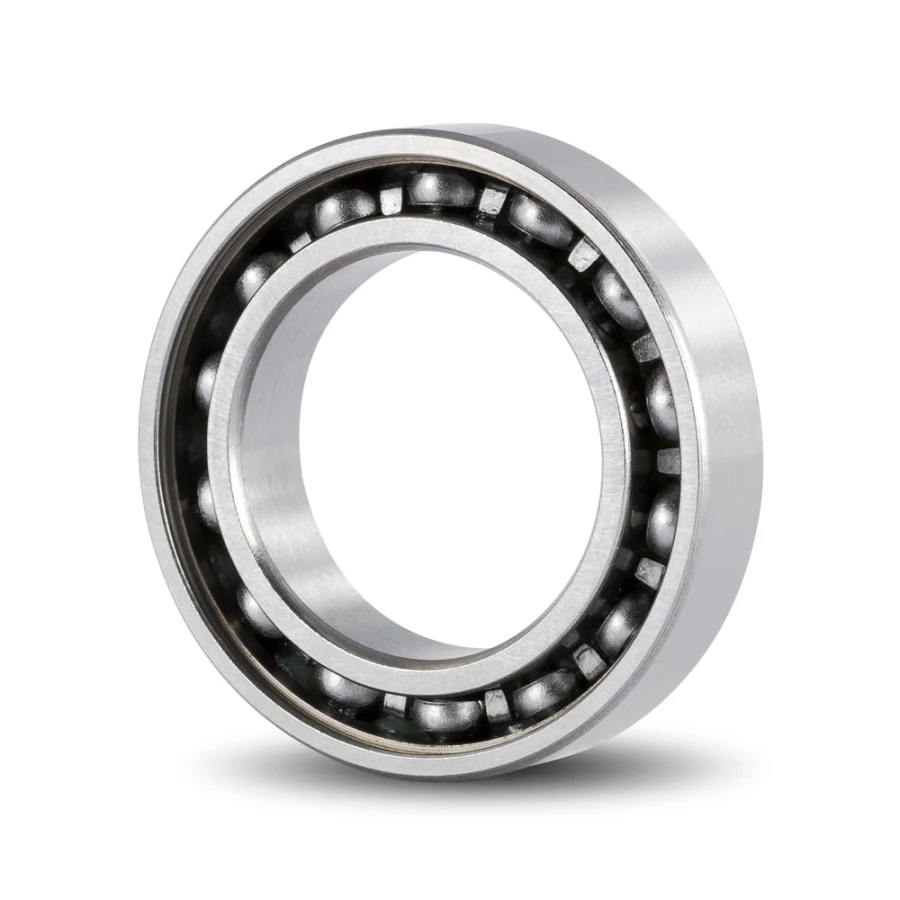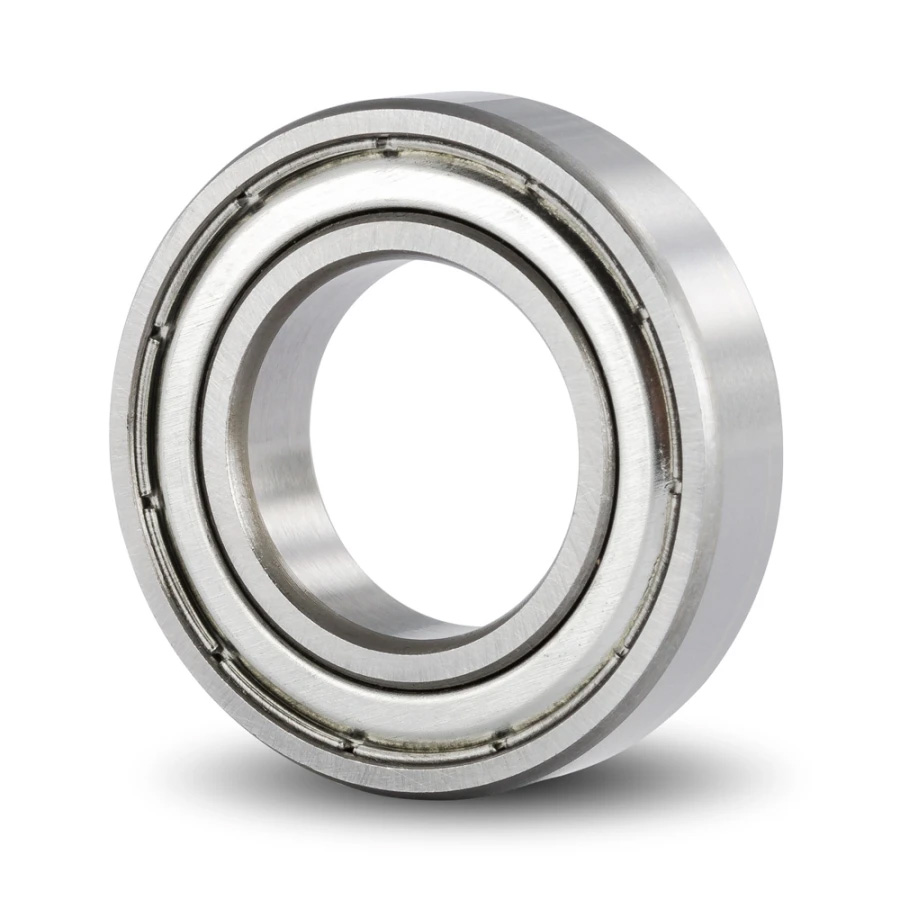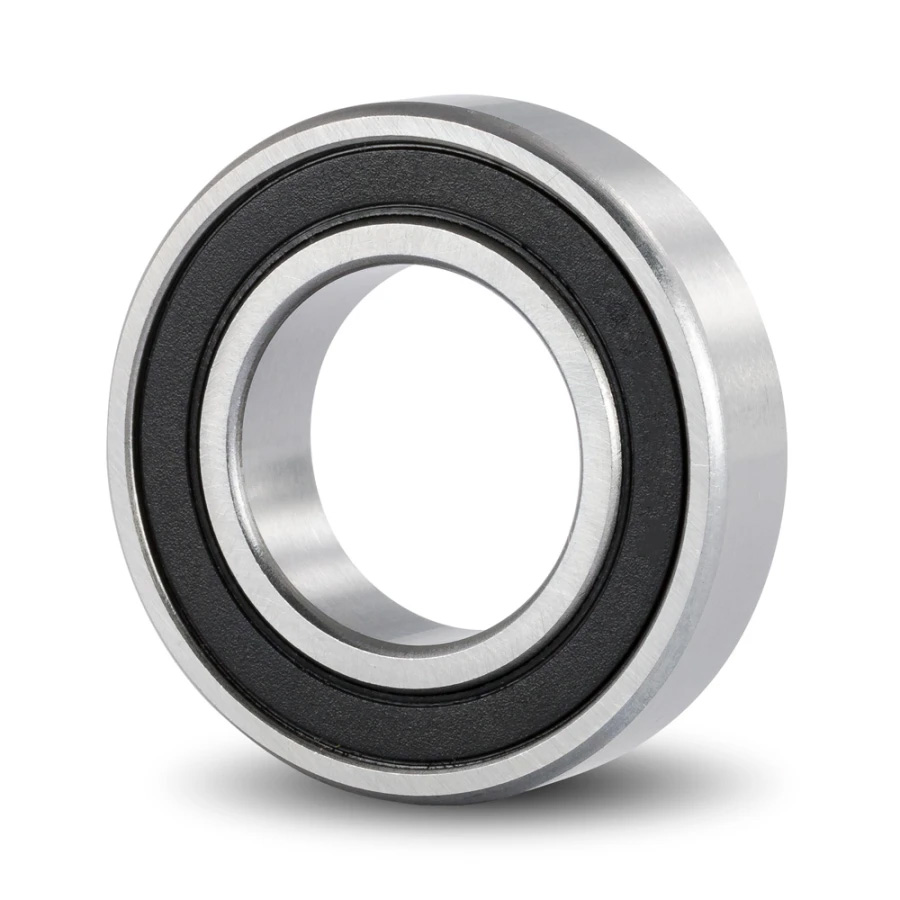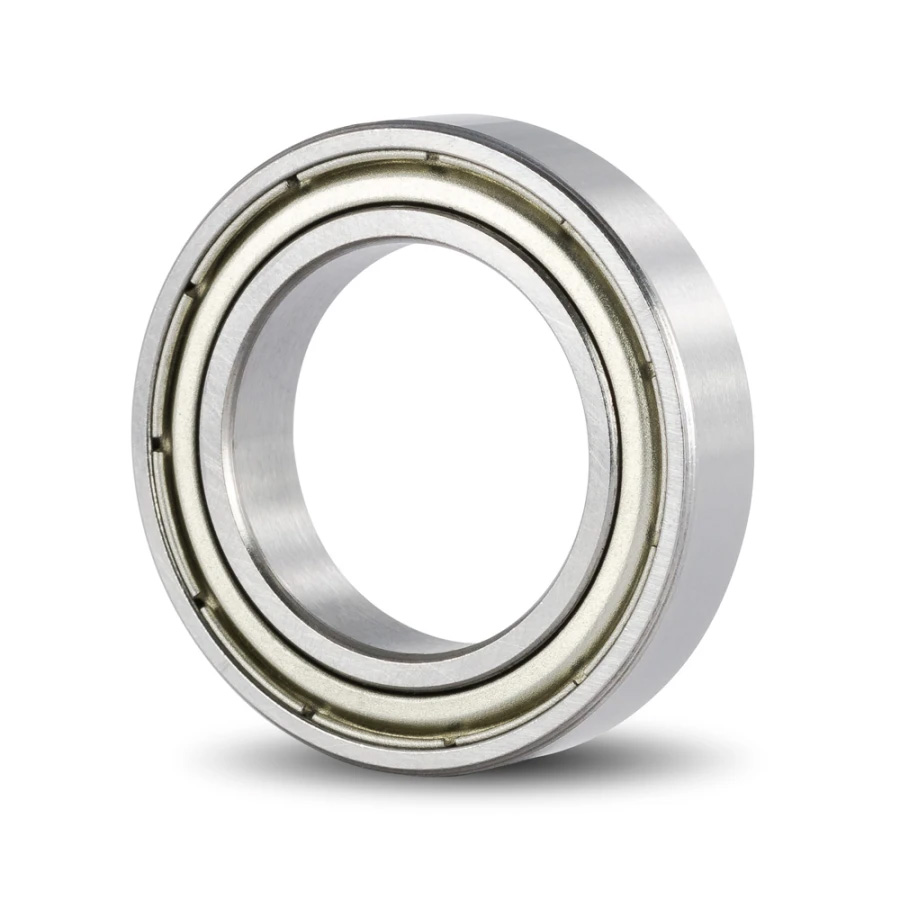
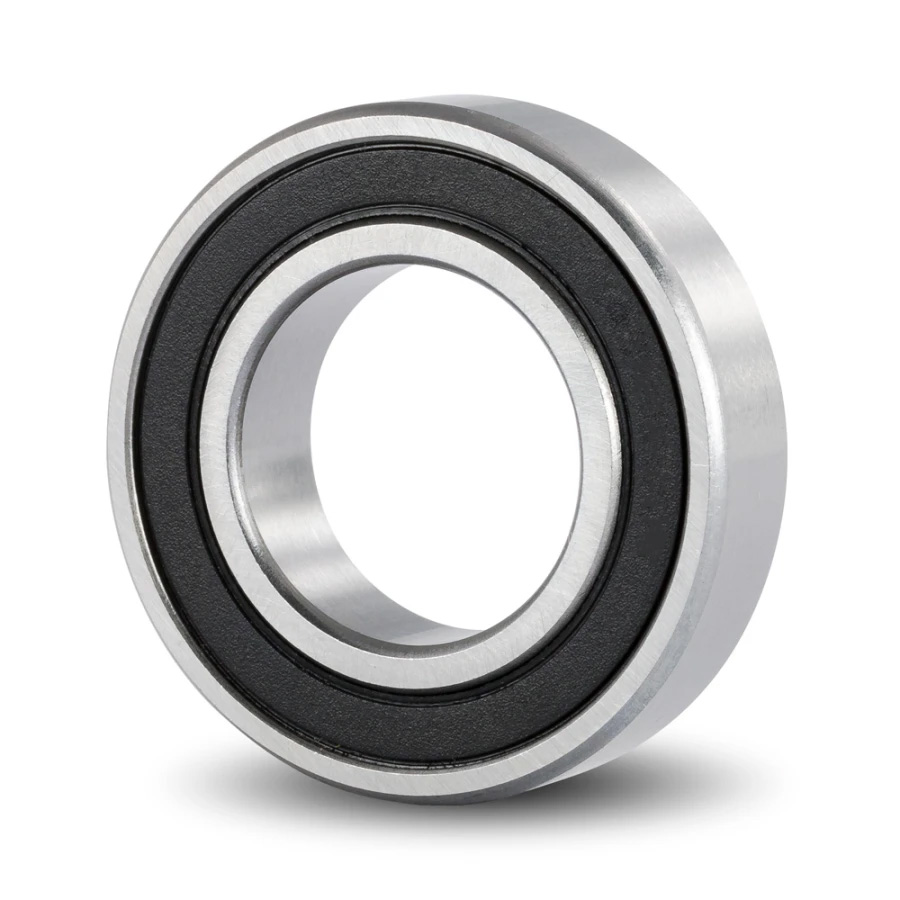

6917 2rs is a radial-contact thin-section ball bearing. The design question is how to provide radial guidance without consuming the space of a heavier ring section. The sealed construction and ABEC-1 precision class belong to the same configuration as its dimensional envelope. Selecting the bearing means considering those features together with the load path, fit and lubrication, rather than matching the model to a nominal diameter alone.
Radial Guidance within the Thin Envelope
6917 2rs has a bore of 85 mm, an outside diameter of 120 mm and a width of 18 mm. The radial-contact arrangement transfers force from the shaft through the inner raceway and ball contacts to the outer ring and housing. Its compact radial section leaves space around the supported shaft, but the surrounding seats still have to maintain ring roundness. The construction is single row.
For radial duty, a housing that is locally flexible or out of round can change the contact pattern around the circumference. Consider axial forces separately instead of treating a compact radial bearing as a substitute for every combined-load arrangement.
Clearance, Precision and Fit Are Different Checks
The radial-clearance entry for 6917 2rs is 0.012mm to 0.036mm. Its designation is C0. This is not the same quantity as its ABEC-1 precision class. Clearance concerns the internal space between the rolling contacts; precision classification concerns dimensional and running accuracy. Neither value alone establishes the installed preload or the accuracy of the complete mechanism. Fits and temperature differences can alter the running contact condition after assembly.
The interface tolerance limits are bore: -0.02mm to 0; outside diameter: -0.015mm to 0; width: -0.200mm to 0. Keep the unit and dimensional role of each limit intact. These bearing tolerances do not prescribe the finished shaft or housing size. Assess interference, thermal growth and shoulder alignment together: excessive fit-induced ring deformation can consume clearance or introduce uneven loading, while inadequate location can allow unwanted movement. Thin rings make the surrounding part geometry especially consequential.
The Material Combination at Each Component
The component materials for 6917 2rs are rings: Chrome Steel; balls: Chrome Steel; cage: Stainless Steel. Rings and balls form the loaded rolling contacts, whereas the cage separates and guides the balls. Those roles should remain distinct when comparing configurations: the cage material does not identify the rings, and a ring material does not identify the rolling-element material.
Material choice affects contact behavior, thermal response and the way the cage operates within the bearing. Stainless steel is present in the specified component combination, but that does not establish resistance to every fluid or atmosphere. Exposure must be assessed for each relevant component and for the lubricant. Contamination, surface condition and operating temperature remain part of the application assessment. A material label cannot replace a review of the rolling contacts and the surrounding enclosure.
Enclosure and Lubrication as One Arrangement
The sealed configuration uses an integral closure to help retain lubricant and limit direct contaminant entry. Seal contact belongs in the friction and heat assessment alongside the lubricant and bearing load. This is a bearing configuration, not a complete machine environmental rating; exposure and adjacent sealing still need to be considered for the intended assembly.
Lubrication is required. Establish lubricant type, supply and quantity for the real duty rather than assuming a particular factory fill. Load, speed, temperature and orientation affect film formation and heat. Too much lubricant can increase churning, while an inadequate film can impair contact behavior. Any replenishment provision must maintain cleanliness and avoid damaging the closure or forcing the slender rings out of alignment.
Interpreting Ratings without Mixing Load Roles
For 6917 2rs, the dynamic radial load rating is 7178 lbf and the static radial load rating is 6660 lbf. Dynamic and static ratings answer different questions: fatigue assessment during rotation and the risk of permanent deformation under stationary, peak or slowly moving load. They are not interchangeable operating limits.
The temperature-range entry is -30°C to 110 °C. Maximum speed is 6.2 in the stated ×1,000 rpm convention. Retain that multiplier when interpreting the value. These figures have to be considered with the selected lubricant, closure, fit and heat-removal conditions. A demanding load case can change the practical operating condition even when one isolated value appears acceptable. Calculate the bearing reactions from the complete mechanism and use the real duty cycle; the ratings do not establish a particular service life or assembled-system performance.
Mounting without Distorting the Rings
Mounting 6917 2rs begins with clean, burr-free seats and a review of the complete bearing envelope. Check journal roundness and housing support so that the thin rings do not simply follow errors in the mating parts. Installation force for an interference fit should act on the ring being fitted, avoiding a force path through the balls and raceways. Shoulder and adjacent-part geometry must allow the bearing to seat without unintended contact or uneven axial loading.
The assembly should be checked after clamping as well as before it. Housing deformation, tilted shoulders or uneven restraint can change the running clearance and load distribution. Free rotation and observations of torque, noise and temperature can help identify binding before normal service. Those checks complement dimensional inspection; they do not replace an assessment of alignment, lubrication and the loads that the assembled mechanism will actually impose.
Choosing the Complete Configuration
This bearing type is commonly considered for compact drives and instruments that need radial guidance within a restricted ring envelope. Use that context to frame the engineering assessment, not as a guarantee that a particular machine is suitable. The load directions, duty cycle, operating speed, exposure and available support stiffness still have to be established. A replacement with the same bore can differ in contact geometry, closure or internal condition, so nominal size alone is not sufficient.
For 6917 2rs, start with radial contact, the complete envelope and the installed clearance, then assess the sealed configuration and ABEC-1 precision class against the same operating conditions. Materials, lubrication and the selected fits interact with those choices. Keeping the configuration intact through purchasing and assembly is more useful than evaluating each parameter in isolation: the bearing must work with the shaft, housing and reaction path as one mechanical arrangement.