
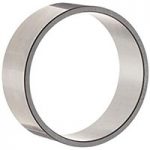
IR25X30X20.5-XL Needle Bearing Inner Ring

| Part Number | IR25X30X20.5-XL |
| Brand: BearingMaker | Interchangeable With: Schaeffler (INA) |
| System of Measurement | Metric |
| Roller Bearing Type | Needle |
| Series | IR |
| Bore Dia | 25 mm |
| Bore Dia Tolerance | -0.01mm to 0 |
| Outer Dia | 30 mm |
| Outer Dia Tolerance | -0.012mm to 0 |
| Width | 20.5 mm |
| Width Tolerance | -0.12mm to 0 |
| Rmin | 0.3 mm |
| Material | Chrome Steel |
| Lubrication | Lubricated |
| RoHS | Compliant |
| Weight | 33.4 g |
Why Choose Bearing Maker
- Fast Global Shipping
- OEM/ODM Services
- Technical support & design
- Quality Control
- Worldwide customer base
IR25X30X20.5-XL is a needle-bearing inner ring. The configuration identifies series IR. Its selection starts with the interface it contributes to the mechanism. The separately specified mating members, their seating and the intended contact condition determine how that interface works after assembly. Keep the component designation with its dimensional and condition data when comparing alternatives; a similar nominal size is not enough to establish a replacement.
Component Role and Mating Contact
IR25X30X20.5-XL supplies an inner raceway member for a compatible needle roller arrangement. The roller track is on its outside surface, while the bore locates the ring on the shaft. A separate inner ring can be useful when the shaft is not intended to provide the rolling surface directly. It does not supply the needle set, cage or outer raceway.
Raceway diameter and width must agree with the needle assembly and the available axial position. Shaft fit and support can alter ring geometry, so the contact track must remain round and aligned after installation. Check the mating needle arrangement and any required surface condition together. A ring bore that fits a shaft does not, by itself, demonstrate the correct running clearance or roller contact.
Dimensions That Define the Interfaces
The principal dimensional entries identify System of Measurement: Metric, Bore Dia: 25 mm, Outer Dia: 30 mm, and Width: 20.5 mm. The bore is the shaft locating interface and the outside diameter is the roller-track interface. Coordinate the track width with needle guidance and possible axial displacement. Treating the raceway diameter as another mounting dimension would miss the contact relationship that defines this ring.
Interface limits include Bore Dia Tolerance: -0.01mm to 0, Outer Dia Tolerance: -0.012mm to 0, and Width Tolerance: -0.12mm to 0. Use each limit for the dimension named. Component limits do not directly specify a shaft or housing machining tolerance. The required fit also depends on support stiffness, loading and temperature. Check the assembled geometry after seating rather than judging compatibility from one nominal dimension. Retain the signs and units of each limit instead of treating it as a symmetric tolerance.
Backing, Edge Clearance and Assembly
Seat IR25X30X20.5-XL without marking its roller track or distorting the ring. Shaft fit, shoulder position and ring support must leave the working surface round and aligned with the needle assembly. Consider the actual axial motion and the lubricant route together; a ring that seats correctly can still be unsuitable if the roller track or surrounding clearance is wrong. The relevant interface entries are Rmin: 0.3 mm.
After assembly, check seating, alignment, the intended freedom of motion and lubricant access before applying normal duty. Preserve the individual contact and backing relationships when evaluating runout, heating or wear. Do not route mounting force through rolling contacts simply because it is convenient, and do not infer an installation torque, fit class or preload force that has not been specified.
Material Roles and Geometric Condition
The stated component entries are Material: Chrome Steel. This entry describes the ring member and must not be extended to the separately selected rolling elements or cage. Consider the mating surface and actual operating exposure together. The material name does not independently establish heat treatment, contact endurance or environmental qualification of the completed arrangement.
Assess the contact condition using the specified geometry and the required mating surface condition. No unlisted grade or hardness should be assigned to the component. Surface condition and the mating material affect contact stress and wear. Relate these details to alignment, lubricant film and cleanliness without assigning an unlisted material treatment or operating capability.
Ratings and the Operating Arrangement
Evaluate capacity through the complete mating contact system rather than assigning a load limit to this component alone. The working surface must remain correctly supported and aligned, with contact conditions established by the mating design. Load, speed and lubricant film interact in the completed arrangement. The component designation and nominal size cannot replace that operating assessment.
Operating entries identify Lubrication: Lubricated. Lubricant selection, delivery and heat removal depend on the complete duty. Provide a route to the working contacts and account for contamination and retention through the surrounding design. Do not assign an enclosure or a replenishment interval from the component designation.
Selecting the Component as Part of a System
The selection of IR25X30X20.5-XL should resolve the needle assembly, working raceway diameter and shaft fit. This is the component’s useful engineering context, not a machine-specific approval. Compare the exact designation and interface condition before considering an alternative. Material roles, tolerances and any operating entries must remain connected to the same ordered component rather than borrowed from another member of the arrangement.
For procurement and assembly planning, retain the part specification with the confirmed mating designations and the dimensional requirements of the mechanism. Check support, lubricant access and the intended operating duty as a connected system. The value of this component lies in providing its particular interface correctly; similar nomenclature, a shared series or a matching nominal size cannot establish whole-bearing performance or exact interchangeability.
Related products
-
IR120X130X30-XL Needle Bearing Inner Ring
-

IR260X285X60-XL Needle Bearing Inner Ring
-

IR110X120X30-XL Needle Bearing Inner Ring
-

IR240X265X60-XL Needle Bearing Inner Ring
-
IR300X330X80-XL Needle Bearing Inner Ring
-

IR100X110X40-XL Needle Bearing Inner Ring
-
IR180X195X45-XL Needle Bearing Inner Ring
-
IR95X110X35-XL Needle Bearing Inner Ring