Miniature bearings are small rolling-element bearings designed for compact mechanisms where space, weight, speed, torque, and precision all matter.
They are widely used in:
- small electric motors
- cooling fans
- precision instruments
- medical devices
- encoders
- robotics
- miniature pumps
- office equipment
- consumer electronics
- aerospace mechanisms
Although miniature bearings operate on the same basic principle as larger ball bearings, reducing bearing size changes the engineering priorities.
A small bearing may need to rotate at very high speed while producing extremely low torque.
Its shaft may be only a few millimeters in diameter.
A very small amount of contamination, excess grease, shaft error, or installation force can therefore have a significant effect on performance.
Miniature bearing selection should consider more than:
- bore diameter
- outside diameter
- width
A reliable design also depends on:
- load direction
- speed
- starting torque
- running torque
- internal clearance
- precision
- noise
- lubrication
- sealing
- shaft fit
- housing fit
- operating environment
This guide explains the main miniature bearing types, common sizes, key design considerations, typical applications, and a practical process for selecting the right bearing.
What Is a Miniature Bearing?
A miniature bearing is a small rolling bearing designed for shafts and mechanisms where the available space is limited.
Most miniature bearings are ball bearings because balls provide an effective combination of:
- low friction
- high speed
- compact size
- precision
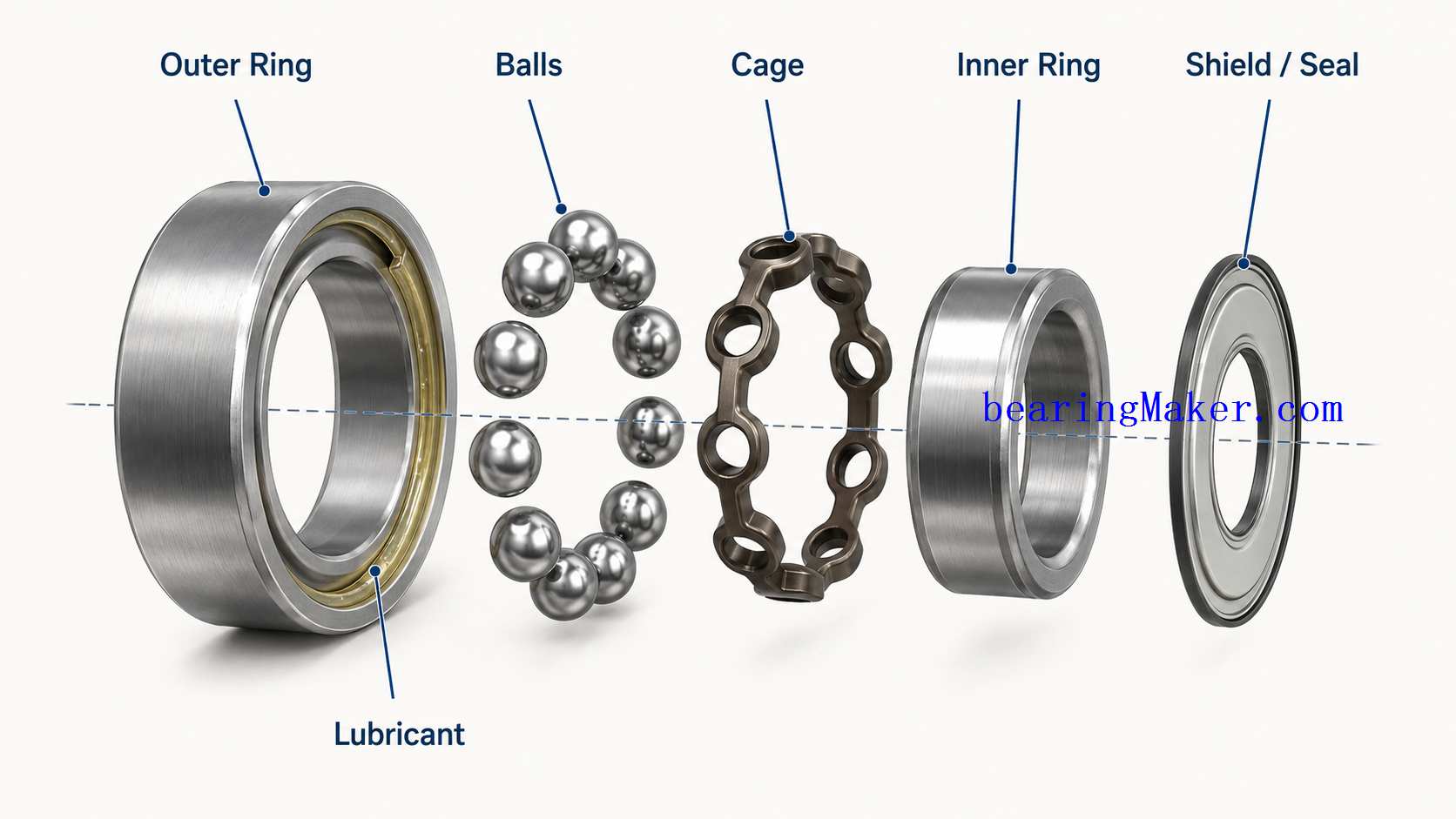
Miniature bearings typically use:
- inner ring
- outer ring
- balls
- cage or separator
- lubricant
- optional shields or seals
Their basic load path is:
shaft → inner ring → balls → outer ring → housing
The principle is familiar, but the small scale makes manufacturing accuracy and system integration particularly important.
How Small Is a Miniature Bearing?
There is no single universal dimensional boundary that every manufacturer or industry uses for the term “miniature bearing.”
In practical engineering use, the term generally refers to bearings with:
- very small bore diameters
- compact outside diameters
- narrow widths
They are often associated with shafts only a few millimeters in diameter.
Because definitions vary, it is better to select miniature bearings from actual:
- bore
- outside diameter
- width
- load
- speed
requirements rather than relying only on the word “miniature.”
Miniature Bearings vs. Small Ball Bearings
The terms miniature bearing and small ball bearing are sometimes used interchangeably.
However, they do not always refer to exactly the same dimensional range.
A practical way to think about them is:
- miniature bearings occupy the smallest end of conventional bearing sizes
- small ball bearings extend upward into somewhat larger dimensions
The exact boundary is less important than the application requirements.
Miniature Bearings vs. Thin Section Bearings
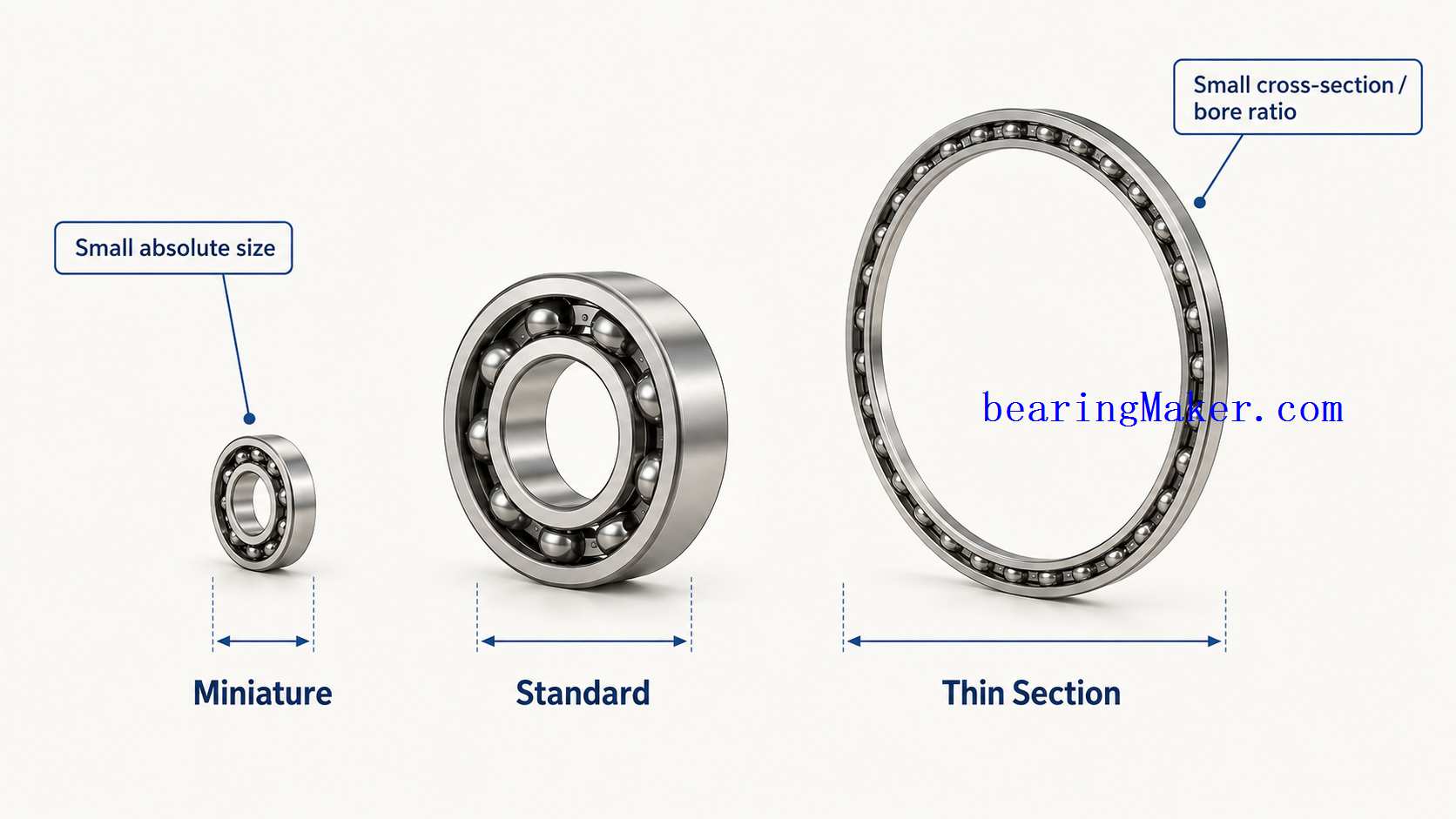
Miniature bearings and thin section bearings solve different design problems.
A miniature bearing is small in absolute size.
A thin section bearing is small in cross-section relative to its bore diameter.
A thin section bearing can actually be very large in overall diameter.
| Feature | Miniature Bearing | Thin Section Bearing |
|---|---|---|
| Main design goal | Very small overall bearing | Large bore with small section |
| Bore | Usually very small | Can be large |
| OD | Small | Often large |
| Typical shaft | Small solid shaft | Large/hollow shaft |
| Main challenge | Speed, torque, precision | Ring deformation, moment load |
| Common application | Small motors, instruments | Robotics, optics, rotary joints |
Why Use Miniature Bearings?
Miniature bearings are selected where engineers need rotary support inside a very small mechanical package.
Their main benefits include:
- compact size
- low mass
- low friction
- high speed capability
- precise motion
They can allow a mechanism to use:
- smaller shafts
- smaller motors
- lighter housings
- more compact assemblies
Compact Mechanical Packaging
Space is one of the strongest reasons to use a miniature bearing.
Applications such as:
- small motors
- instruments
- encoders
- hand-held devices
may have very little radial or axial space available.
A miniature bearing can provide accurate shaft support without dominating the mechanical layout.
Low Bearing Mass
Miniature bearings contain very little material.
This helps reduce:
- overall product weight
- rotating inertia
Low mass can be important in:
- portable equipment
- drones
- small robotics
- high-acceleration mechanisms
Low Friction
Ball contact can provide very low rolling resistance when the bearing is:
- correctly lubricated
- properly fitted
- not excessively preloaded
Low friction is particularly valuable in:
- small motors
- precision instruments
- sensors
where drive torque may be limited.
High Speed Capability
Miniature bearings are frequently used at high rotational speeds.
Small diameter reduces the circumferential distance traveled per revolution compared with large bearings.
However, very high RPM can still create demanding conditions involving:
- cage speed
- ball dynamics
- lubricant shear
- heat
High-speed design therefore requires more than simply choosing a small bearing.
Main Components of a Miniature Ball Bearing
A typical miniature ball bearing consists of:
- inner ring
- outer ring
- balls
- cage
- lubricant
- shields or seals where required
Each component influences performance.
Inner Ring
The inner ring normally mounts on the shaft.
Important factors include:
- bore tolerance
- roundness
- fit
- shoulder support
Outer Ring
The outer ring normally mounts into the housing.
Important factors include:
- housing fit
- concentricity
- support
Balls
Balls transmit load between the rings.
Their:
- size
- roundness
- surface quality
influence:
- load capacity
- vibration
- noise
Cage
The cage spaces and guides the balls.
It can influence:
- speed
- torque
- noise
- acceleration performance
Shields and Seals
Closures protect the internal rolling contacts from contamination.
They also affect:
- friction
- starting torque
- speed
Main Types of Miniature Bearings
The most common miniature bearing type is the deep groove ball bearing, but several configurations are available depending on mechanical requirements.
Deep Groove Miniature Ball Bearings
Deep groove designs are widely used because they offer:
- good radial load capacity
- some axial load capability
- low friction
- high speed
- simple construction
Typical applications include:
- electric motors
- fans
- instruments
- small pumps
Flanged Miniature Bearings
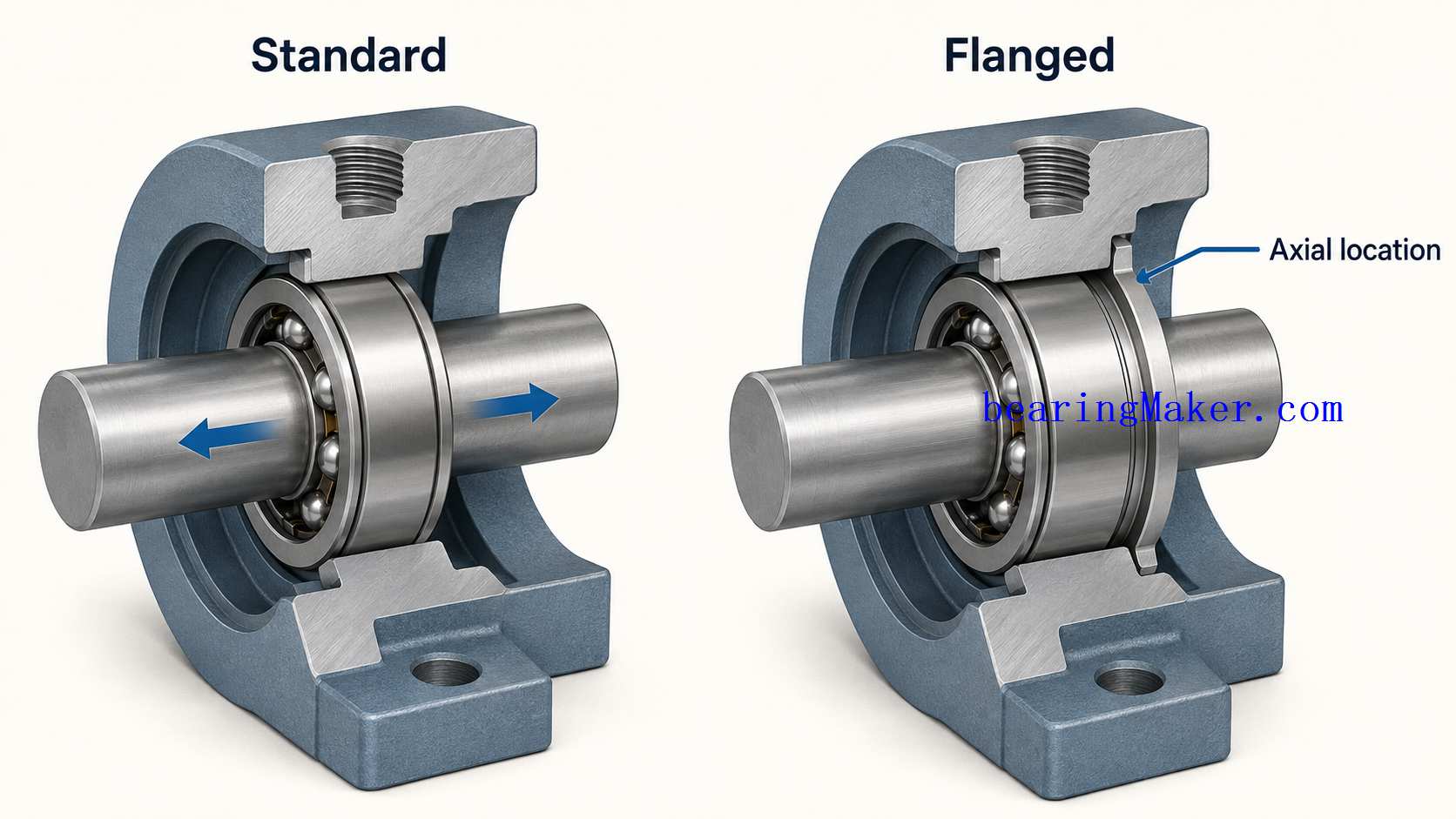
Flanged miniature bearings include an integral flange on the outer ring.
The flange helps locate the bearing axially against the housing.
Advantages include:
- easier assembly
- simpler housing geometry
- reduced risk of bearing movement
They are common in very small mechanisms where machining a separate housing shoulder may be inconvenient.
Extended Inner-Ring Bearings
Some miniature bearings use an extended inner ring.
The extension can simplify:
- shaft location
- mounting
- spacing
in compact assemblies.
Open Miniature Bearings
Open bearings have no integral shield or seal.
Advantages include:
- lowest closure friction
- good high-speed potential
- easy lubricant access
They are suitable for controlled environments where contamination protection is provided by the machine.
Shielded Miniature Bearings
Shielded bearings use low-contact or non-contact protective covers.
They offer:
- better contamination protection than open bearings
- relatively low friction
They are widely used in:
- small electric motors
- fans
- instruments
Sealed Miniature Bearings
Sealed bearings use contact or low-contact seals.
Advantages include better protection against:
- dust
- moisture
- debris
The trade-off may be:
- increased starting torque
- increased running torque
- lower practical speed
Open vs. Shielded vs. Sealed
| Configuration | Friction | Protection | Speed Potential | Typical Use |
|---|---|---|---|---|
| Open | Lowest | Low | Highest | Clean enclosed systems |
| Shielded | Low | Moderate | High | Motors, fans |
| Low-contact sealed | Moderate | High | Moderate–High | Precision equipment |
| Contact sealed | Higher | Very high | Lower | Dirty environments |
Metric and Inch Miniature Bearings
Miniature bearings are available in both:
- metric dimensions
- inch dimensions
The correct choice is often determined by:
- shaft standard
- existing design
- replacement requirements
- regional equipment standards
Metric Miniature Bearings
Metric bearings use dimensions specified in millimeters.
They are common in:
- modern industrial equipment
- electronics
- robotics
- international machine designs
Inch Miniature Bearings
Inch-series miniature bearings are used in equipment designed around imperial shaft dimensions.
They are still important in:
- legacy machinery
- specialized instruments
- some aerospace and industrial systems
Understanding Miniature Bearing Dimensions
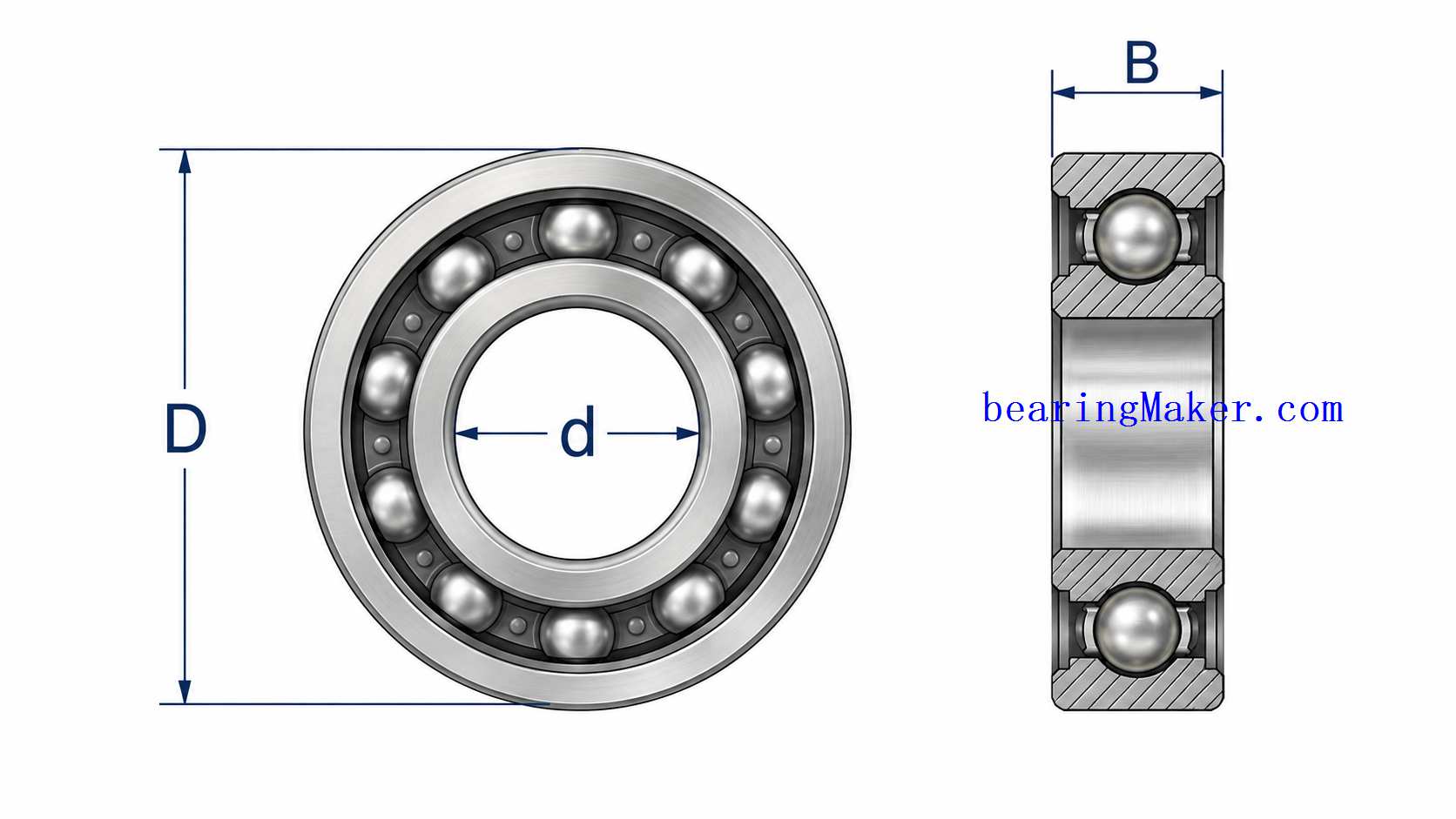
The three primary dimensions are:
- bore diameter dd
- outside diameter DD
- width BB
These determine whether the bearing fits the mechanical envelope.
Bore Diameter
The bore must match the shaft design.
A larger bore usually allows:
- stronger shaft
- greater shaft stiffness
but also increases bearing size.
Outside Diameter
The outside diameter determines:
- housing size
- available radial space
In small mechanisms, even a small increase in OD may require redesigning the housing.
Width
Bearing width affects:
- axial packaging
- ring geometry
- available internal space
A wider bearing may allow more robust geometry but occupies more axial space.
Size vs. Load Capacity
In general, larger miniature bearings can accommodate:
- larger balls
- larger raceway contact areas
and therefore higher load capacity.
But increasing bearing size also increases:
- space
- mass
- inertia
Selection therefore involves a packaging-performance trade-off.
Size vs. Speed
Smaller bearings may support very high shaft RPM because their rolling-element path diameter is small.
However, actual speed capability depends on:
- cage
- lubricant
- seals
- load
- preload
How Miniature Bearings Carry Load
Miniature ball bearings may carry:
- radial load
- axial load
- combined load
The exact capability depends on bearing design.
Radial Load
Radial load acts perpendicular to the shaft axis.
Typical sources include:
- rotor weight
- belt forces
- side loads
- impeller forces
Deep groove miniature bearings are commonly used for radial support.
Axial Load
Axial load acts parallel to the shaft.
Possible sources include:
- impeller thrust
- helical components
- actuator force
Deep groove bearings can generally support some axial load, but high thrust may require a different bearing arrangement.
Combined Load
Many miniature bearing applications experience both:
- radial
- axial
forces.
The equivalent bearing load should be evaluated using the appropriate bearing-specific method.
Dynamic Load Rating
Dynamic load rating is used in rolling-fatigue life calculations.
For ball bearings, the basic rating-life relationship can be expressed as:
L10=(CP)3L_{10}= \left(\frac{C}{P}\right)^3
where:
- L10L_{10} = basic rating life in millions of revolutions
- CC = basic dynamic load rating
- PP = equivalent dynamic bearing load
Static Load Rating
Static load rating becomes important when the bearing experiences:
- stationary loads
- slow motion
- impact
- shock
Small bearings can be damaged by incorrect assembly force even if normal operating loads are low.
Why Small Bearings Can Be Sensitive to Overload
Miniature bearings use:
- small balls
- small raceways
A force that appears small in absolute terms may still be significant relative to the contact area.
This is especially important during:
- press installation
- impacts
- drops
- assembly
Bearing Life Is Not Only About Load
Basic fatigue calculations are important, but real service life is also affected by:
- lubrication
- contamination
- shaft alignment
- preload
- temperature
For miniature bearings, contamination and lubrication can be particularly important because internal clearances and contact surfaces are so small.
Speed Considerations
Miniature bearings are often associated with high-speed operation.
Common applications include:
- small electric motors
- cooling fans
- dental equipment
- miniature spindles
RPM Is Only One Speed Variable
Although miniature bearings are small, speed should still be evaluated using both:
- RPM
- bearing diameter
A useful speed factor combines rotational speed with mean bearing diameter.
Mean Diameter
A simplified mean diameter is:
dm=d+D2d_m=\frac{d+D}{2}
where:
- dd = bore
- DD = outside diameter
A speed factor such as:
n×dmn\times d_m
can help compare different bearing sizes.
High-Speed Effects
As speed increases:
- centrifugal effects increase
- cage forces increase
- lubricant drag increases
- heat generation increases
The practical speed limit may therefore be controlled by:
- temperature
- torque
- lubricant
rather than mechanical strength alone.
Starting Torque
Starting torque is the torque needed to begin rotation.
It matters especially in:
- small motors
- sensors
- precision instruments
because available motor torque may be very limited.
What Increases Starting Torque?
Common contributors include:
- contact seals
- high-viscosity grease
- excessive grease
- preload
- tight fits
- low temperature
Running Torque
Running torque is the resistance after the bearing is rotating.
High running torque may cause:
- increased power consumption
- heat
- reduced speed
- poor servo behavior
Why Torque Matters More in Small Systems
A torque increase that would be insignificant in a large industrial machine may represent a large percentage of the available motor torque in a miniature mechanism.
This is why miniature bearings often require careful control of:
- grease quantity
- seals
- fits
Internal Clearance
Internal clearance is the amount of relative movement available between the rings before significant load develops.
It affects:
- friction
- vibration
- stiffness
- temperature
Too Much Clearance
Excessive clearance can cause:
- vibration
- noise
- reduced precision
Too Little Clearance
Insufficient clearance can cause:
- high torque
- heat
- increased contact stress
Fits Can Change Clearance
An interference fit can:
- expand the inner ring
- compress the outer ring
and reduce internal clearance.
In very small bearings, dimensional changes can be significant relative to the original clearance.
Preload
Preload intentionally removes clearance to increase:
- stiffness
- positional stability
However, excessive preload can create:
- torque
- heat
- shorter life
Miniature bearing preload should therefore be controlled carefully.
Precision
Miniature bearings are frequently used in equipment where rotational accuracy matters.
Important precision characteristics include:
- bore tolerance
- outside diameter tolerance
- radial runout
- axial runout
Bearing Precision vs. System Precision
A precision bearing does not automatically create a precision assembly.
System accuracy also depends on:
- shaft runout
- housing concentricity
- shoulder squareness
- fit
- assembly accuracy
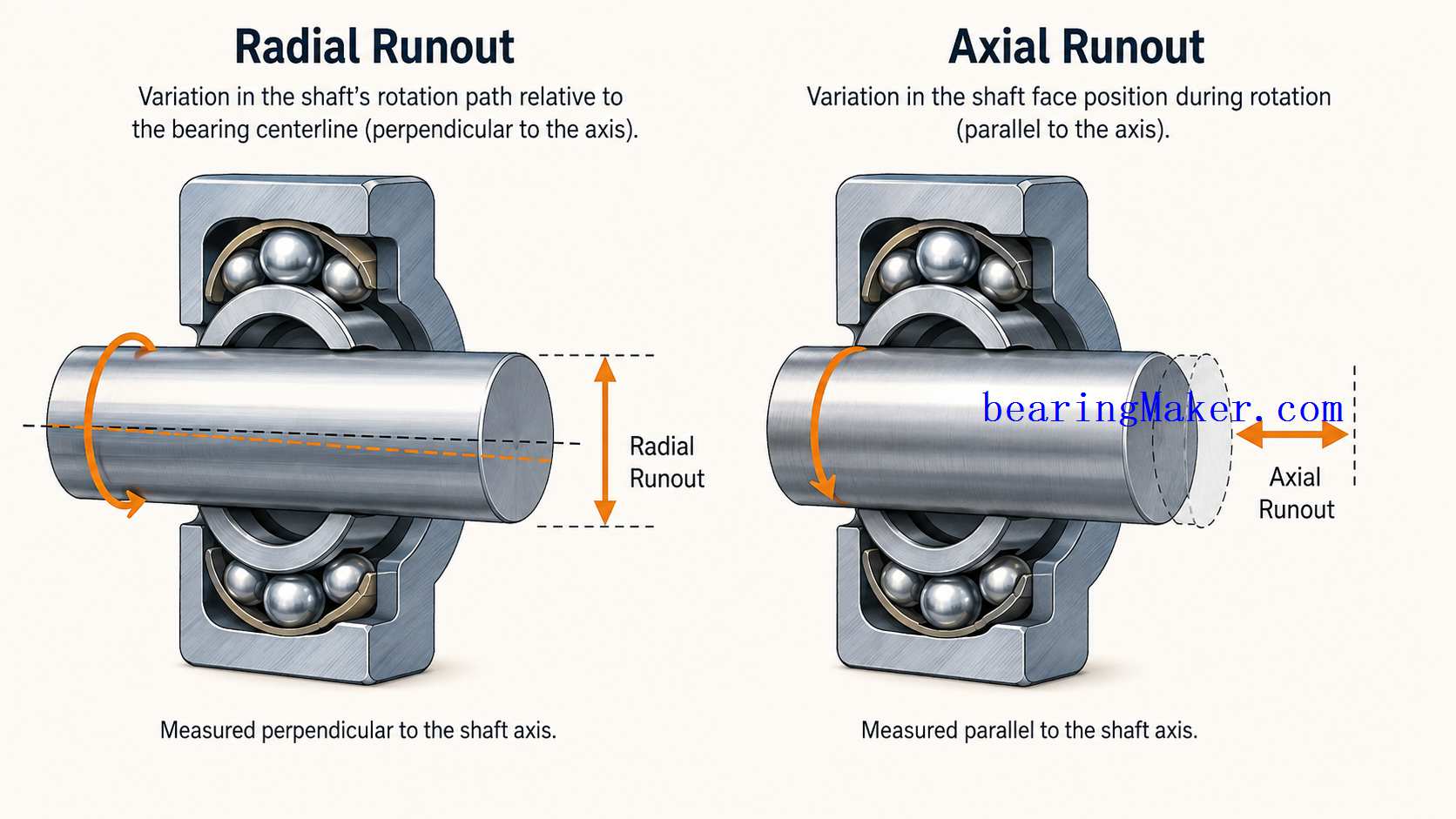
Radial Runout
Radial runout is variation perpendicular to the shaft axis during rotation.
It can affect:
- motor vibration
- encoder accuracy
- instrument precision
Axial Runout
Axial runout is variation along the shaft axis.
It can affect:
- optical mechanisms
- rotating sensors
- precision faces
Noise and Vibration
Low noise is a major requirement in many miniature bearing applications.
Examples include:
- cooling fans
- medical devices
- office electronics
- instruments
Bearing noise can come from several sources.
Raceway Surface Quality
Surface irregularities can increase:
- vibration
- noise
Precision finishing helps reduce these effects.
Ball Quality
Ball roundness and surface quality influence smoothness.
Lubricant
Lubricant can strongly affect:
- acoustic behavior
- torque
Some applications use lubricants selected specifically for low-noise performance.
Contamination
A tiny contaminant particle can be large relative to the miniature bearing contact area.
This can create:
- roughness
- noise
- raceway damage
Clean assembly is therefore particularly important.
Cage and Seal Noise
Noise may also originate from:
- cage movement
- seal contact
This is why high bearing precision alone does not guarantee quiet operation.
Bearing Fits
The inner and outer rings must be retained correctly without being excessively distorted.
Shaft Fit
The shaft should provide:
- correct diameter
- roundness
- surface finish
A fit that is too loose can cause:
- creep
- fretting
A fit that is too tight can:
- reduce clearance
- increase torque
Housing Fit
The housing bore should provide:
- correct diameter
- concentricity
- adequate support
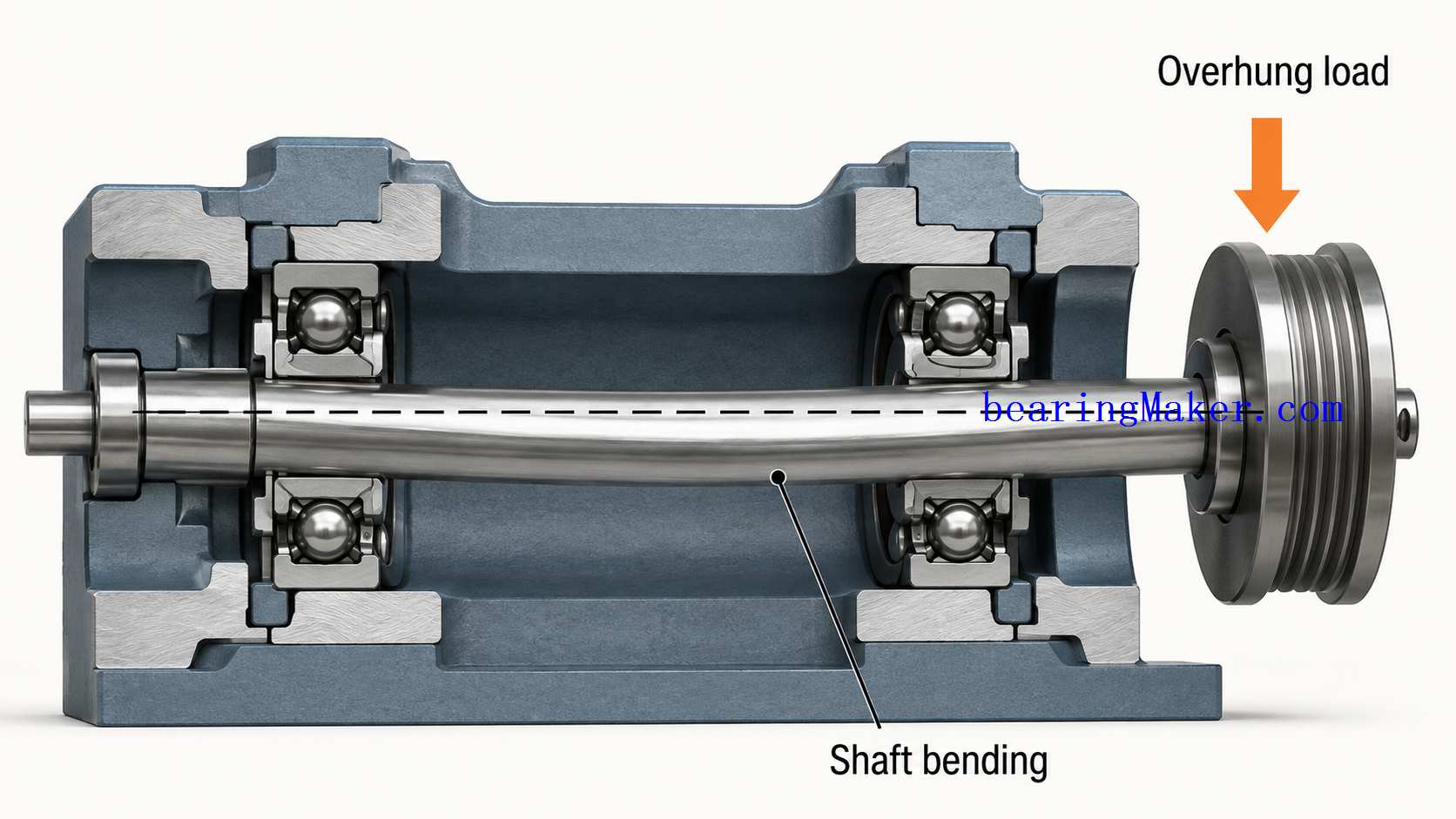
Small Shaft Stiffness
Miniature bearing shafts are often very small.
A thin shaft can bend even when the bearing itself has sufficient load capacity.
Shaft deflection may cause:
- misalignment
- uneven bearing load
- runout
Installation
Miniature bearings can be damaged easily during assembly because their components are small.
Installation force should generally be applied to the ring with the interference fit.
Avoid Force Through the Balls
If the inner ring has the press fit, force should be applied to the inner ring.
If the outer ring has the press fit, force should be applied to the outer ring.
Transmitting installation force through the balls can damage:
- raceways
- balls
Avoid Impact Installation
Hammering can create:
- brinelling
- raceway damage
- misalignment
Controlled pressing is preferable.
Cleanliness During Installation
Dust or machining debris can severely affect a miniature bearing.
Assembly areas should therefore control:
- particles
- dirty tools
- contaminated lubricant
Lubrication
Lubrication is one of the most important factors in miniature bearing performance.
Common options include:
- grease
- oil
Grease Lubrication
Grease is widely used because it provides:
- long retention
- simple assembly
- low maintenance
It is common in:
- fans
- motors
- instruments
Grease Quantity Matters
Miniature bearings have very little internal free volume.
A small absolute amount of excess grease can represent a large percentage of the available internal space.
Too much grease can cause:
- churning
- high torque
- heat
This is one reason miniature bearings should not simply be lubricated using the same habits as much larger bearings.
Oil Lubrication
Oil may be selected where:
- speed is very high
- low viscous drag is required
- continuous lubrication is available
However, oil systems can add complexity.
Lubricant Viscosity
Viscosity affects:
- lubricant film
- torque
- temperature
A lubricant that is too viscous can significantly increase the torque of a very small bearing.
Low-Temperature Lubrication
At low temperature, grease becomes more resistant to motion.
This may increase starting torque.
Applications operating in cold environments should evaluate lubricant behavior at actual operating temperature.
Seals and Shields
Closure selection balances:
contamination protection vs. friction
Open Bearings
Best where:
- environment is clean
- minimum friction is required
Shielded Bearings
Offer a useful balance of:
- protection
- low drag
and are common in motors and fans.
Sealed Bearings
Provide stronger protection but generally add more torque.
They may be appropriate in:
- dusty
- moist
environments.
Miniature Bearing Materials
Material selection depends on:
- load
- corrosion
- speed
- environment
- cost
Bearing Steel
Hardened bearing steel is widely used because it offers:
- high hardness
- good wear resistance
- strong fatigue performance
It is suitable for many general miniature bearing applications.
Stainless Steel
Stainless bearing materials may be selected for:
- humidity
- medical equipment
- chemical exposure
- corrosive environments
The exact balance of:
- hardness
- corrosion resistance
depends on the material.
Hybrid Ceramic Bearings
Hybrid bearings combine:
- metallic rings
- ceramic balls
Potential advantages include:
- lower rolling-element mass
- electrical insulation
- high hardness
They may be considered for selected:
- high-speed motors
- electrical applications
- precision equipment
They are not automatically superior for all miniature bearing applications.
Cage Materials
Cages may use:
- metal
- polymers
depending on:
- speed
- temperature
- torque
- cost
Special Operating Environments
Miniature bearings may operate in demanding environments.
Corrosive Environments
Possible requirements include:
- stainless materials
- protective seals
- corrosion-resistant lubricant
Cleanroom Applications
Requirements may include:
- controlled grease
- low particle generation
- low leakage
Vacuum Applications
Vacuum environments may require:
- low-outgassing lubricants
- compatible materials
Electrical Applications
Current passing through rolling contacts can cause damage.
Hybrid ceramic bearings may sometimes be used to electrically isolate the shaft.
Main Miniature Bearing Applications
Miniature bearings are used across a broad range of equipment.
Small Electric Motors
Small motors are one of the largest application groups.
Bearing priorities may include:
- high speed
- low noise
- low torque
- long life
The bearing directly affects:
- motor efficiency
- vibration
- acoustic performance
Brushless Motors
Brushless motors may operate at:
- high speed
- frequent acceleration
Important factors include:
- cage behavior
- lubrication
- balance
- precision
Cooling Fans and Blowers
Fan bearings often need:
- low noise
- long operating life
- low friction
Lubricant life can be particularly important because many fans operate continuously for long periods.
Precision Instruments
Instruments may prioritize:
- low torque
- runout
- repeatability
The bearing load itself may be very small.
Encoders
Encoder bearings may influence:
- rotational accuracy
- signal repeatability
Important factors include:
- shaft runout
- bearing clearance
- low drag
Medical Devices
Miniature bearings may be used in:
- diagnostic devices
- small medical motors
- hand-held instruments
Possible priorities include:
- smooth motion
- cleanliness
- corrosion resistance
- low noise
Dental Equipment
Some dental devices require very high rotational speed.
Bearing selection may be dominated by:
- speed
- heat
- lubrication
- precision
Robotics and Small Actuators
Miniature bearings are useful in:
- small servo mechanisms
- compact actuators
- robotic grippers
Typical priorities include:
- compact size
- low weight
- precision
Drones and Small Aerospace Mechanisms
Small aerospace and drone mechanisms may benefit from:
- low mass
- high speed
- compact size
They may also experience:
- vibration
- shock
Miniature Pumps
Pump bearings may need to handle:
- radial load
- axial load
- moisture or chemicals
Material and sealing therefore become important.
Consumer Electronics
Miniature bearings may appear in mechanisms requiring:
- low noise
- small package
- long life
Application Comparison
| Application | Main Bearing Priority |
|---|---|
| Small motor | Speed + low noise |
| Cooling fan | Low noise + lubricant life |
| Encoder | Runout + low torque |
| Medical device | Precision + cleanliness |
| Dental equipment | Very high speed |
| Precision instrument | Low torque + accuracy |
| Small robot | Compact size + low weight |
| Drone mechanism | Low mass + vibration resistance |
| Pump | Load + corrosion/sealing |
How to Select a Miniature Bearing
A practical selection process should begin with system requirements rather than a bearing part number.
Step 1: Define Shaft Diameter
Determine the required bore based on:
- shaft strength
- available space
- existing shaft size
Step 2: Define Maximum Outside Diameter
Determine the available radial envelope.
Step 3: Define Maximum Width
Check available axial space.
Step 4: Identify Load Direction
Determine:
- radial load
- axial load
- combined load
Step 5: Determine Load Magnitude
Include:
- continuous load
- peak load
- shock
Step 6: Check Dynamic Load Capacity
Estimate required fatigue life.
For ball bearings:
L10=(CP)3L_{10}= \left(\frac{C}{P}\right)^3
is the basic starting relationship.
Step 7: Check Static Capacity
Consider:
- installation load
- impact
- stationary loading
Step 8: Define Speed
Specify:
- continuous RPM
- peak RPM
Step 9: Define Torque Requirement
Determine acceptable:
- starting torque
- running torque
This is especially important in small motors and instruments.
Step 10: Define Precision
Specify:
- radial runout
- axial runout
- vibration
- noise
Step 11: Select Clearance or Preload
Balance:
- stiffness
- torque
- temperature
Step 12: Define Shaft and Housing Fits
Verify:
- diameter
- roundness
- interference
Step 13: Select Lubrication
Choose lubricant based on:
- speed
- temperature
- torque
- life
Step 14: Select Shielding or Sealing
Balance:
- contamination protection
- friction
Step 15: Select Material
Consider:
- corrosion
- electrical insulation
- temperature
Step 16: Verify Installation
Confirm that assembly forces will not pass through the rolling elements unnecessarily.
Step 17: Validate Actual Operating Conditions
Check:
- temperature
- torque
- noise
- vibration
after assembly.
Miniature Bearing Selection Matrix
| Requirement | Common Starting Direction |
|---|---|
| High speed | Open/shielded deep groove bearing |
| Low torque | Low-friction closure + controlled lubricant |
| Low noise | High-quality bearing + low-noise lubricant |
| Dust protection | Sealed/shielded bearing |
| Corrosion resistance | Stainless bearing |
| Electrical isolation | Hybrid ceramic may be considered |
| Very small housing | Flanged miniature bearing may simplify assembly |
| Long fan life | Lubrication and seal strategy critical |
| Precision instrument | Low runout + low torque |
| High-speed motor | Speed, cage, lubrication, fit |
Common Miniature Bearing Selection Mistakes
Mistake 1: Selecting by Size Only
A bearing may fit physically but fail requirements for:
- speed
- torque
- life
- noise
Mistake 2: Ignoring Starting Torque
In a small motor, bearing starting torque can be a meaningful portion of available motor torque.
Mistake 3: Using Too Much Grease
Excess grease can significantly increase:
- torque
- heat
Mistake 4: Selecting the Strongest Seal Automatically
Maximum sealing may create unnecessary drag.
Mistake 5: Ignoring Shaft Stiffness
A small shaft can bend even when the bearing itself is strong enough.
Mistake 6: Using Excessive Interference
Tight fits can reduce internal clearance and increase torque.
Mistake 7: Pressing Through the Balls
Incorrect installation can permanently damage the raceways.
Mistake 8: Ignoring Contamination
Tiny particles can be large relative to miniature bearing contact surfaces.
Mistake 9: Assuming High Precision Automatically Means Low Noise
Noise also depends on:
- lubricant
- contamination
- cage
- fit
Mistake 10: Ignoring Operating Temperature
Temperature changes:
- lubricant viscosity
- clearance
- torque
Troubleshooting High Torque
Possible causes include:
- excess grease
- contact seal
- preload
- tight fit
- low temperature
Troubleshooting Noise
Possible causes include:
- contamination
- damaged raceway
- lubricant
- cage
- excessive clearance
- shaft misalignment
Troubleshooting Vibration
Possible causes include:
- runout
- imbalance
- brinelling
- shaft bending
Troubleshooting Overheating
Possible causes include:
- excessive preload
- too much grease
- excessive speed
- seal friction
- misalignment
Frequently Asked Questions
What Is a Miniature Bearing?
A miniature bearing is a small rolling bearing designed for compact shafts and mechanisms.
Most miniature bearings use balls because they provide:
- low friction
- high speed
- precision
What Is the Difference Between a Miniature Bearing and a Small Bearing?
The terminology varies.
Miniature bearings generally refer to the smallest sizes within small bearing families.
Actual dimensions should always be checked.
Is a Miniature Bearing the Same as a Thin Section Bearing?
No.
Miniature bearings are small in overall size.
Thin section bearings have a small cross-section relative to their bore and can be very large in diameter.
What Types of Miniature Bearings Are Available?
Common types include:
- deep groove
- flanged
- extended inner-ring
- open
- shielded
- sealed
Can Miniature Bearings Carry Axial Load?
Deep groove miniature bearings can usually carry some axial load.
The allowable amount depends on bearing design and operating conditions.
Can Miniature Bearings Run at High Speed?
Yes.
Many miniature bearings are designed for high-speed applications.
However, speed capability depends on:
- lubricant
- cage
- seals
- load
- preload
Why Are Miniature Bearings Used in Electric Motors?
They provide:
- compact size
- low friction
- high speed
- low noise
Why Are Miniature Bearings Noisy?
Possible causes include:
- contamination
- raceway damage
- lubricant
- cage
- excessive clearance
Why Does a Miniature Bearing Have High Starting Torque?
Possible causes include:
- seal drag
- viscous grease
- excessive grease
- preload
- tight fit
Should Miniature Bearings Be Greased?
Many miniature bearings use grease, but the correct:
- grease type
- quantity
are important.
Excess grease can create high torque.
Are Shielded or Sealed Bearings Better?
Neither is universally better.
Shielded bearings generally provide lower friction.
Sealed bearings provide stronger contamination protection.
Are Stainless Miniature Bearings Better?
Stainless bearings are useful where corrosion resistance matters.
They are not automatically better for every load or speed requirement.
Are Ceramic Miniature Bearings Better for High Speed?
Hybrid ceramic bearings can provide advantages in selected high-speed applications because ceramic balls have lower mass.
The complete design should still consider:
- lubrication
- preload
- cost
How Important Is Shaft Accuracy?
Very important.
Miniature bearing shafts are small, so errors in:
- diameter
- roundness
- runout
can strongly affect performance.
Can Miniature Bearings Be Preloaded?
Yes.
Preload can increase stiffness and reduce play, but excessive preload increases:
- torque
- heat
How Long Do Miniature Bearings Last?
Service life depends on:
- load
- speed
- lubrication
- contamination
- temperature
- installation
Basic L10 calculations provide only part of the answer.
Miniature Bearing Selection Checklist
Before finalizing a miniature bearing, define:
| Parameter | What to Determine |
|---|---|
| Bore | Shaft diameter |
| Outside diameter | Maximum housing space |
| Width | Maximum axial space |
| Bearing type | Deep groove/flanged/etc. |
| Radial load | Continuous and peak |
| Axial load | Magnitude |
| Dynamic rating | Required capacity |
| Static rating | Shock/assembly load |
| Required life | Hours/revolutions |
| Continuous speed | rpm |
| Peak speed | rpm |
| Starting torque | Maximum acceptable |
| Running torque | Maximum acceptable |
| Radial clearance | Required value |
| Preload | Required or not |
| Radial runout | Required accuracy |
| Axial runout | Required accuracy |
| Noise | Acceptable level |
| Vibration | Acceptable level |
| Shaft fit | Correct tolerance |
| Housing fit | Correct tolerance |
| Shaft stiffness | Adequate |
| Lubrication | Grease/oil |
| Lubricant quantity | Controlled |
| Closure | Open/shielded/sealed |
| Material | Steel/stainless/hybrid |
| Temperature | Operating range |
| Contamination | Expected level |
| Corrosion | Expected exposure |
| Maintenance | Required interval |
Conclusion
Miniature bearings are not simply standard bearings made smaller.
Reducing bearing size changes the relative importance of:
- torque
- speed
- lubrication
- contamination
- precision
- shaft geometry
A very small change in:
- grease quantity
- fit
- shaft runout
- contamination
can represent a large change relative to the scale of the bearing.
The strongest applications for miniature bearings are those where the machine requires:
- compact dimensions
- low friction
- high speed
- low mass
- precise motion
Common examples include:
- electric motors
- cooling fans
- instruments
- medical equipment
- encoders
- small robots
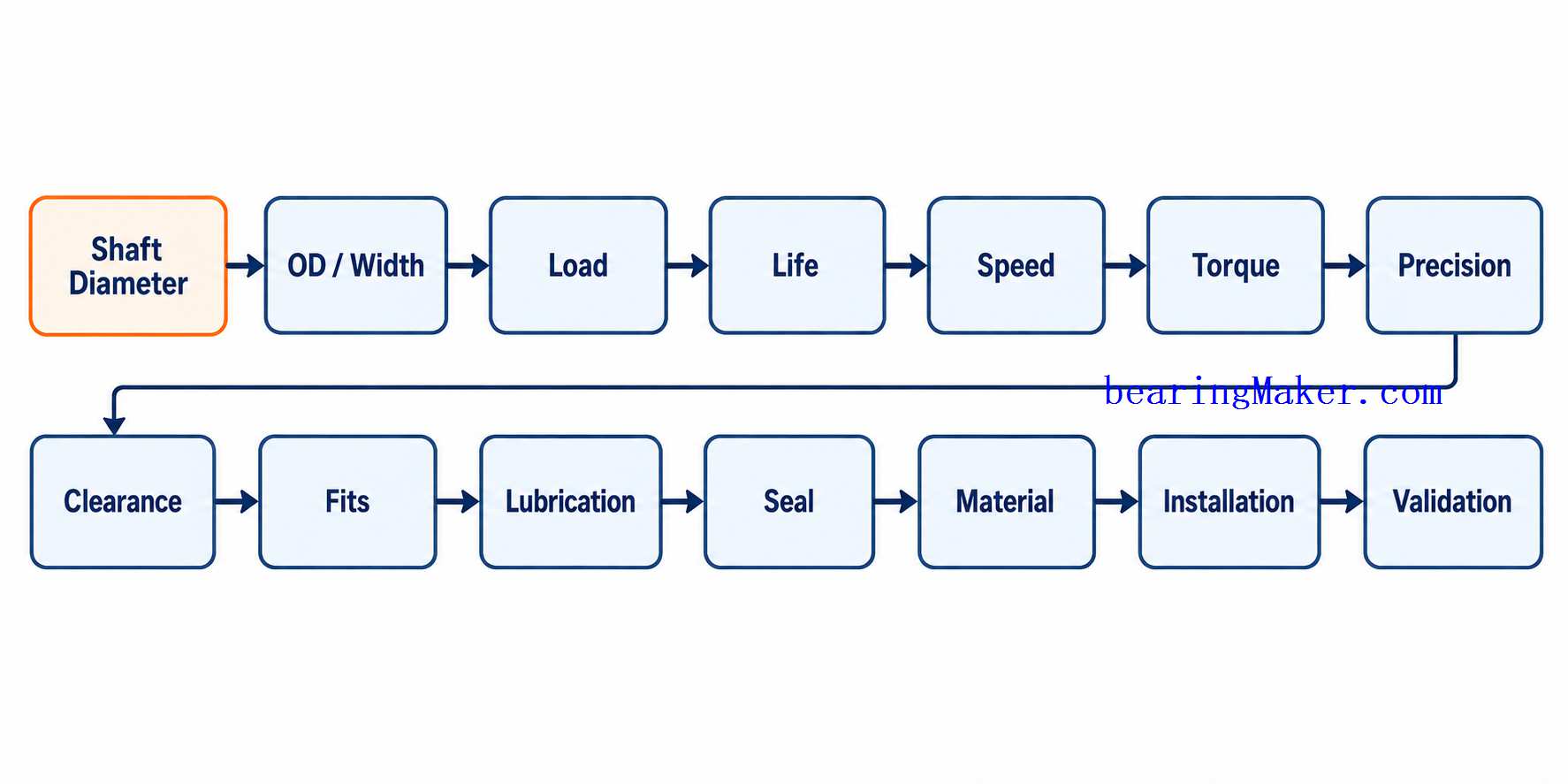
A reliable selection process should follow:
Shaft Diameter → Bearing Envelope → Load → Life → Speed → Torque → Precision → Clearance → Fits → Lubrication → Sealing → Material → Installation → Operating Validation
The goal is not simply to find the smallest bearing that fits the shaft.
The goal is to select a miniature bearing that remains:
- low-friction
- quiet
- accurate
- properly lubricated
- thermally stable
- reliable
throughout the actual operating life of the machine.
