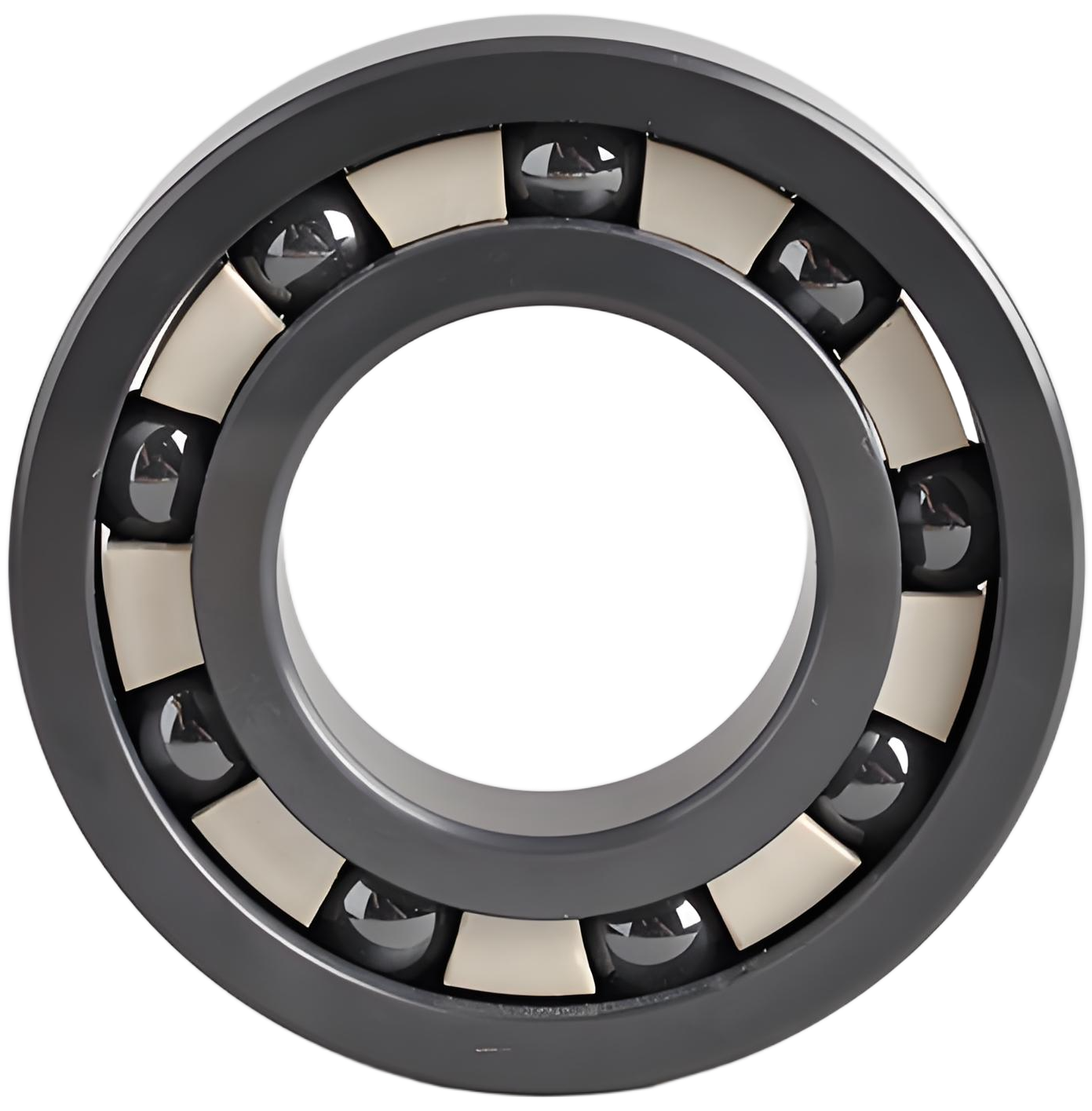
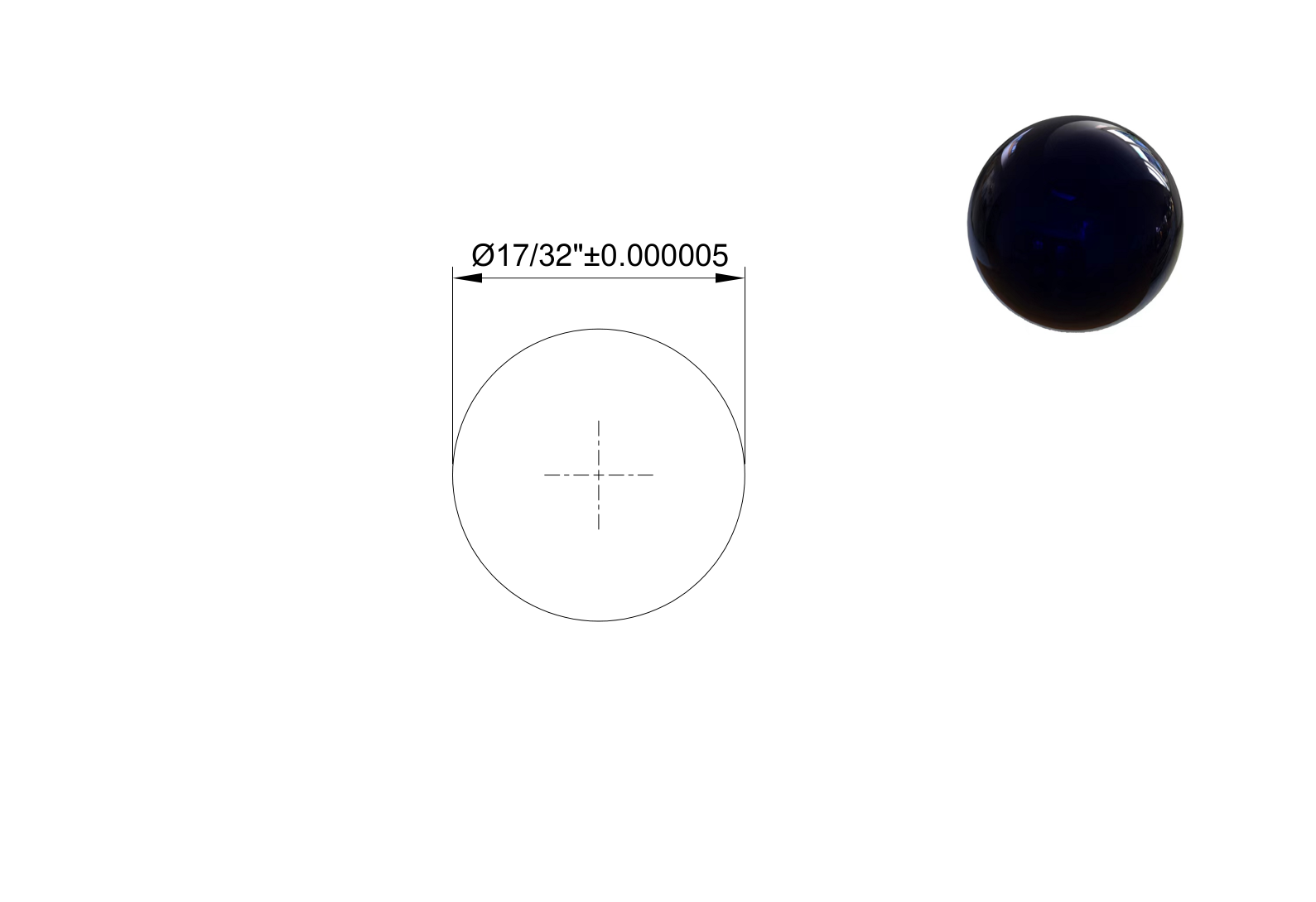
Silicon Nitride Si3N4 Ceramic Balls 17/32 inch G5 is a silicon nitride (Si3N4) ceramic bearing ball supplied as a rolling-element component. Its nominal diameter is 17/32″. Matching this ball to a raceway requires more than the nominal size: diameter variation, form accuracy and the contact materials affect the assembled condition. It is not supplied as a complete bearing, and assembly-level clearance, load capacity or rotational speed cannot be assigned from the ball alone.
Ball Size and Contact Geometry
A ball transmits force at its contacts with the mating raceways. The conformity of those surfaces determines the contact region, while the size and matching of the ball set influence internal freedom. A replacement that fits into the available space can still change the contact condition if its diameter distribution differs from the original set.
For Silicon Nitride Si3N4 Ceramic Balls 17/32 inch G5, the accuracy entries are ball grade 5, diameter tolerance ±0.000005″, and sphericity 0.000005″. These entries have different roles. Nominal diameter defines size, tolerance limits diameter variation, and sphericity describes deviation from the spherical form. None is a precision class for a finished bearing. Match the required controls together rather than using a single grade designation as proof of every assembly requirement.
Material Properties at the Contact
The ball material is silicon nitride (Si3N4). The mating rings, cage or spacers and lubricant remain separate design choices. The ball’s elastic and thermal behavior influences the contact pair, but it does not define the material of those other parts. A ceramic rolling element can be used only after the complete assembly’s geometry and operating requirements have been checked.
The material entries include density: 3.20-3.30 g/cm3, ball hardness: 75-80 HRC, coefficient of thermal expansion: 15 × 10-7/° F, and thermal conductivity: 29 W/m-K @ 20° C. Density matters to the moving element’s inertia, thermal expansion affects size change, and conductivity affects heat transfer. Hardness is a material characteristic rather than a substitute for a contact-stress calculation. These entries cannot independently establish the friction, insulation, corrosion behavior or operating limit of the finished bearing.
Protecting and Matching Precision Surfaces
Handle the precision surface as a working contact surface. Keep the ball clear of grit and impact, use clean handling equipment and protect it before assembly. Small local damage can alter the contact presented to the raceway. Cleaning and inspection methods should suit the actual ceramic compound without assuming that every ceramic responds to the same treatment.
When building a set, preserve the specified diameter and grade relationship among its elements. Mixing unmatched balls can concentrate reaction on a few contacts rather than share it evenly. The required quantity, retainer arrangement and raceway geometry belong to the assembly design. The ball description is not evidence that a cage, seal or ring is included.
Temperature and Lubrication in the Assembly
Consider the ball and the surrounding parts over the intended temperature cycle. Different expansion rates can change internal clearance, and temperature gradients need not be uniform across the rings and rolling elements. Confirm the complete material pair and lubricant before applying a thermal assessment. A material property or broad temperature entry must not be treated as an assembled bearing’s continuous operating guarantee.
Lubrication, surface finish and contamination control affect the rolling contacts after integration. Starting and stopping can present different conditions from steady motion, particularly when the lubricant film is not yet established. Assess the contact system and duty rather than assigning a permissible speed or a service interval from the loose ball’s compound and size.
Component Selection and Assembly Verification
Selection of Silicon Nitride Si3N4 Ceramic Balls 17/32 inch G5 starts with nominal diameter, grade, diameter tolerance, sphericity and material. Compare those requirements with the actual raceway and matching procedure. If an application needs a different precision control or a qualified material condition, confirm it explicitly instead of assuming it from a shared diameter or the ceramic category.
After the rings and rolling-element set are chosen, check the assembled internal clearance or preload and the governing load cases. Seat support, alignment and lubricant delivery all influence the outcome. This component provides one part of that contact system; it cannot replace the specification and verification of the complete bearing or establish interchange with an unidentified assembly.